

Roads are a world-changing technology that we humans take entirely for granted. The world shrinks because of them, but it’s hard to see without close inspection. We don’t really notice their impact because they have been around long before we were born and have already shaped so much of our societies and world views. You have to either use a lot of imagination or do a lot of study to see their impact, unless, of course, you have lived in an inaccessible area that had a road built to it during your lifetime.
Use your imagination though and think back.
When a person walks on foot without a path, they are really just a survivor. As our hunter-gatherer ancestors roamed in search of new things to hunt and gather, they had to survive as they went. Once they started to see where the bountiful lands were, they would eventually leave a trace, which would turn into a path over time.
That path would allow people who can’t navigate to get from one area to another by simply following the string of trodden ground. Nothing too amazing, unless you think from the perspective of someone who has never been so far from their encampment that they couldn’t see it by looking over their shoulder.

That isn’t really the miracle of a road though. What makes a road so remarkable is its ability to connect different peoples, more than its ability to connect a people to other places. It starts with simple trade of course, and it brings good and bad, because most things have good and bad qualities. The important distinction is the fundamental switch between someone being a hunter-gatherer and following a trail, to them becoming a traveler.
If you follow a path and bring enough supplies, you will arrive at a new place where you can resupply. That’s obvious to us modern humans, but it was not always our lot in life to know there was a village over the next mountain pass. We take for granted that a gas station or restaurant will be around the next bend. In the empty world our fore-bearers occupied, no such guarantee existed.
Nowadays we don’t even bother looking at road signs half the time, because a computer is telling us where to go, where to turn, and giving us reviews of the best Mandarin Chinese restaurants along our route, or finding the cheapest petrol station.
Once you have established paths between communities, you can have specialization. You grow the crop, he makes the flour, I’ll mine the salt, she’ll gather the firewood for the oven, and they’ll make the bread. The result? We all eat bread. That is a groundbreaking change in how we as humans lived, and roads were a necessary part of it; I don’t have time to mine salt if I’m busy making flour and gathering firewood.
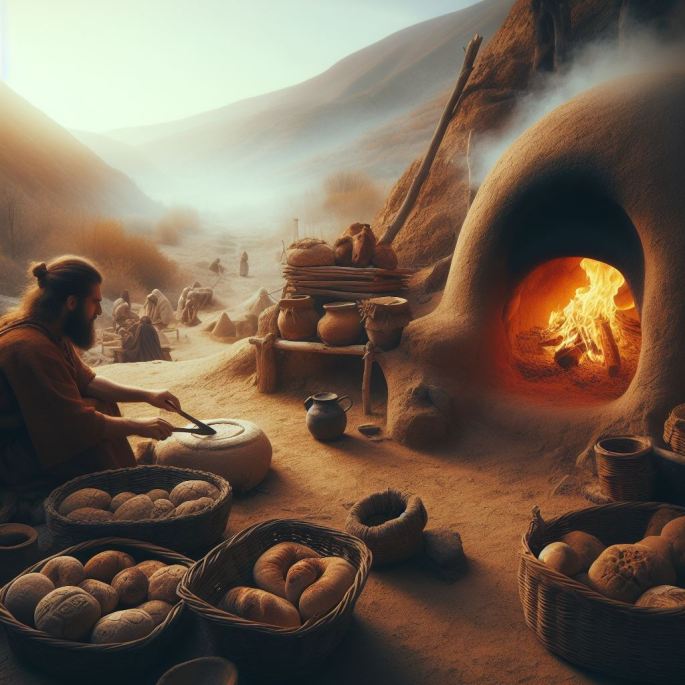 “Hey Siri, bake me a loaf of bread.”
Once that trail becomes a road it can now carry long trains of pack animals. More goods can be carried farther distances. When you find out your village makes the finest silks in the known world and that there is great demand, you may come out of the field, quit farming and make silk. If the silk buyer is delivering the same foodstuff that your are growing in your field, you might actually have to come out of the field for gainful employment. It reshapes cultures having these physical connections between places.
Once the road improves you can have carts, carrying even more items with less cost. A merchant can now afford to not only bring the high-value items and sell them to the wealthy, but can bring items in bulk, finding more buyers and giving access to more people. Raw materials and finished goods can be transported. With a cart you can bring an entire cotton gin or printing press, where before you’d have to disassemble it and carry it on a dozen pack animals or more.
When that road opens to trucks or a rail line, huge quantities of items can be moved. Items that would spoil on a long journey now become valued, instead of unheard of. You don’t just trade salt and flour — you trade bread and pastries. And the cultural exchange really explodes from here.
Now people are being transported… customs and traditions move along the roads. The concept of a guest house for travelers gives way to the Inn and hotel. Enough goods are available that the idea of a dedicated shopkeeper makes sense. No longer is it just trade between merchants and clients — people of all castes are looking for an assortment of goods.

Tradition Does Matter Though
All this change of course means an unimaginable reinvention, but it’s one we Westerners can easily imagine. Soon, losing “the old ways” is an obvious danger. The conundrum there is that it’s really about change and growth, which is what we do individually, so why would it not happen for entire cultures? Wanting a quaint village to stay quaint and unspoiled when you visit is understandable, but the people living in that village wanting construction materials to build new homes and shops is pretty damn understandable too.
But preserving old ways is not the same as forcing people to live as their ancestors have. Our ancestors worked hard to provide for a family so they could have more, do more, and struggle less — to have a better life. Somewhere there is a tipping point between having plenty and having so much you take your lot for granted, but it is different for everyone.
Roads aren’t there to make that decision, but to facilitate exchange.
Perspectives
When we travel by road today we don’t even recognize the miracle; we just yell at everyone driving slower than us for being an idiot, then yell at everyone driving faster than us for being a maniac. And that is a great reason for us to remember the old ways, when we walked everywhere and didn’t know what was going on 50 miles away, unless someone came walking down the road with news of flood, good harvest, or marching army.

Our road systems are now so complex and complete that they have become a subculture of their own. They sit in orderly rows in cities and define neighborhoods. The biggest motorways cut through mountains and rolling hills and span great rivers. Secondary roads lead farmers to market or connect mountain towns, following the undulations and curves of the land.
What all roads do though, is connect. In shortsightedness many people deride the cultural shifts roads bring while enjoying the bounty being brought on those same roads. It is always a matter of perspective, and shortsighted people will usually be the first to offer theirs; it takes a shortsighted person much less time to arrive at a conclusion, as they have much less to consider.
Having traveled roadways in North America most of my life, it is easy to be of the opinion that they are simply part of the landscape. Being raised in Southern California though, I was immersed in car-culture. Whether it be “cruise night” on the local boulevard or the great American road trip in the family wagon, our roads have their own subculture.
They are more than just part of a landscape. They opened this world up more than the telegraph or internet; they just did it so long ago that we don’t recognize the change. Even the American interstate system has been around long enough that most people don’t realize how much it reshaped our country.
But again, when your favorite sleepy fishing village has the road to it paved and it becomes inundated with tourists, you will notice. But, perhaps instead of complaining at the loss, also take time to look at the gain.

The town was perhaps sleepy because the fishing boats sat idle most days. Most people’s kids had grown and left to find work. While it is no longer the hidden gem you want it to be, the new store being built and the new diner opening up serve the townspeople far more than you dropping in on a quiet Tuesday for a cup of coffee. It’s certainly sad to lose those quiet places we treasure (I’ve lost several over the years), but roads bring change, and more often they bring it in the form of opportunity.
It’s a damn shame when I return to a favorite road and find it full of tourist traffic, or when I pull into that sleepy village and find nowhere to park and crowds waiting outside all of the restaurants. It’s probably also a damn shame to watch your town dry up when the railway or interstate bypasses you and all your friends move away. Both are a form of change.
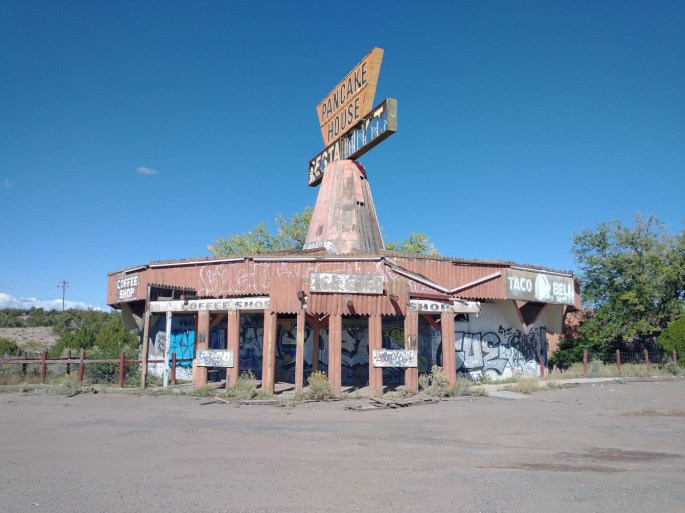
Roads equal change, and we don’t get to pick the good parts and leave the unwanted like life is some kind of buffet. Instead of lamenting the changes that roads bring, I look for places that just had a road completed and try to go there before the hotels spring up. I also look for the places bypassed and left forgotten by time, wondering what the shattered windows of the long-closed hotel saw during their heyday.
We have only but our sliver of time in this long string of time to explore and to see. We will come to understand so much, and then it will pass into history for the next person to come along and understand it themselves, for the first time. With a planet full of roads, I hope to see more, and because of that understand more, and do as much with this sliver of time called my life as I possibly can.
 Johnny Killmore
My insight into what a road does, is close one for an extended period, that has become vital to my life. Yes, there are alternatives, particularly for a commute, but sometimes closing one road has meant I can’t get home. Southern California we get fires, floods and mudslides that close roads. More than once I was glad I was on a motorcycle that could handle some unconventional “bushwhacking” to get from this traffic snarl to my garage.
One especially bad wind storm led to a huge backup on the east bound 91 where I exited before the 57 and headed east on back streets, ending up on La Palma. Picking my way between the cars along Yorba Regional Park, The big eucalyptus trees had dropped limbs and full trees here and there. At one Point I rode up and around downed full trees on the grass of the park, then back on the street a pile of limbs blocked the path as I filtered up to the front of the two lanes of SUV’s. A full on Hummer sitting there next to me with a pile of brush blocking all lanes on both sides the median. The hummer in all its shiny, concourse detail glory sat there with its driver busily trying to find help on his phone.
I kicked the big 1150 BMW GS Adventure into gear and rode over the pile just as Jimmy Lewis had drilled us. I was free from all traffic all the way home, only needing to ride over a few more limbs.
I’ve experienced two track dirt roads becoming graded gravel leading to what were once little known and used forest campgrounds to busy areas with full season campground hosts. The pit toilets got better at least. Tents were replaced by Class A motorhomes with blinged out jeeps in tow.
I felt quite alone with my little backpacker tent and Norton Commando. But, I didn’t really need to cook as all those motorhomes held friendly folks who nearly forced meals and coffee and drinks when I only had stories to offer. But, we had a laugh and talked travel and fishing and photography because that was why we were there.
Remember that book you put me onto by the British officer who rode across the US on a Henderson.? That’s what I think of when I think of roads and highway impact and progress. Also Blue Highways.
I’ll still pick the little two lane roads over the interstate if I can take the time. There is still plenty to see. The difference between the super slab at 100 feet per second and a relaxing thump-thump, pause, thump-thump of an old concrete two lane at half that rate is strawberry stands with fried burrito and a iced tea and McDonalds at a mega-truck stop/casino/hotel.
I’m still looking for that four calendar cafe’.
LikeLiked by 1 person
Well for sure, as creatures, we understand things in relation to other things. Change is therefore important. From changes in patterns (like spotting the face of a predatory animal in a line of scrub) to changes over time (in language, in climate, in societies, in anything), we really get a lot of our sense of “what is” by “what has been.”
Rapid change of course is different, but having a road suddenly close can be a real eye-opener for people who never thought about what they take for granted. It’s a main reason going on strike works, or at least works if you are providing a service people can’t replace easily.
When the “road into town” closes and no food or fuel or firewood or anything comes in, it will definitely remain in memory. People who live in heavy-snow areas know keeping a week’s food and water might not be enough.
I actually just happened to read a 2023 piece in The New Yorker called “The Case Against Travel.” I was hoping for an interesting counterpoint but the author had an odd tendency to switch between “travel” and “tourism” without noticing the distinction. People who go to Bora Bora to see a show aren’t looking to change their personality or world view any more than a person going to the movie theater down the street; tourism is not fundamentally the same as travel.
The author seemed to grasp it by saying travel for work or education or art was somehow okay, but didn’t seem to grasp the distinction. I guess I’m going nowhere with my point other than it reminded me about roads. They don’t care. They bring the adventurers looking for cultural exchange, but if a bus can get up there it will bring tourists looking to buy trinkets and take photos.
I think it’s part of why I cancelled my South America trip this year; I was going because I needed to go somewhere. There are still things I want to see down there, and one day I believe I will, but I just didn’t have that “thing” inside that compelled me. I wasn’t going to learn, grow, exchange… I was just going to ride around and look at things.
I have no idea why Canada jumped out, but suddenly, I “had” to go… I had to see this place that I was only vaguely aware of before. Sometimes we can just see a road and go “hmm” and find adventure down it, but the mindset is more important than the location. As kids we could explore our own backyard (literally) and it was a grand adventure. The mindset is the most important difference between travel for experience or tourism — the act of going and seeing stuff in other places.
But, if there was a central thrust to this, it’s lost to me. I guess I just find the building of roads both fascinating but at the same time terrifying, because things seem to homogenize once a road gets to a certain quality. You can even see it in the faceless kind of roadside stops on the US interstate, vs the small and medium sized towns that live on backroads.
Somehow when that 2-lane goes to 4, things change. But I think even when the road goes from a half-decent trail to a graded gravel road, change happens. Sometimes it’s for the best, like in African towns where rains turn the road into mud an nothing gets in except by air. People benefit if the road is improved. At some point it tips in the other direction, and I find that part to be the most interesting.
Like, making things too easy brings people looking for an easy go of things, but if things are too tough no one can make it but the hardiest of people. Somewhere there’s a sweet-spot, and the quality of the road in and out isn’t the only deciding factor, but SO MUCH comes in and out on roads…our whole modern world is built from what gets transported over them, in people, goods, and raw material.
LikeLike