
Okay hear me out. You may not follow motorcycle racing or be interested in motorcycles at all, but this is a solid idea that anyone can grasp. Consider this an open letter to anyone affiliated with Kawasaki, Bimota, or World Superbike (WSBK). The thrust of my intention is to remind the world at large of Anthony Gobert’s achievements for Bimota, and to suggest Bimota use their re-entry into WSBK as a perfect opportunity to not only create a new Gobert-edition motorcycle for sale to the public, but to use the opportunity to help addicts in recovery at the same time. Let me explain.
A Short Backstory
You are not alone if you’ve never heard of Bimota, but they’ve been around since 1973. The name is actually the first two letters of the founders’ last names: Valerio Bianchi, Giuseppe Morri, and Massimo Tamburini. Some motorcyclists will at least know Tamburini’s name, because he is responsible for the look of several timeless designs, which is difficult to pull off in the world of sport-bikes because of their rapid development.
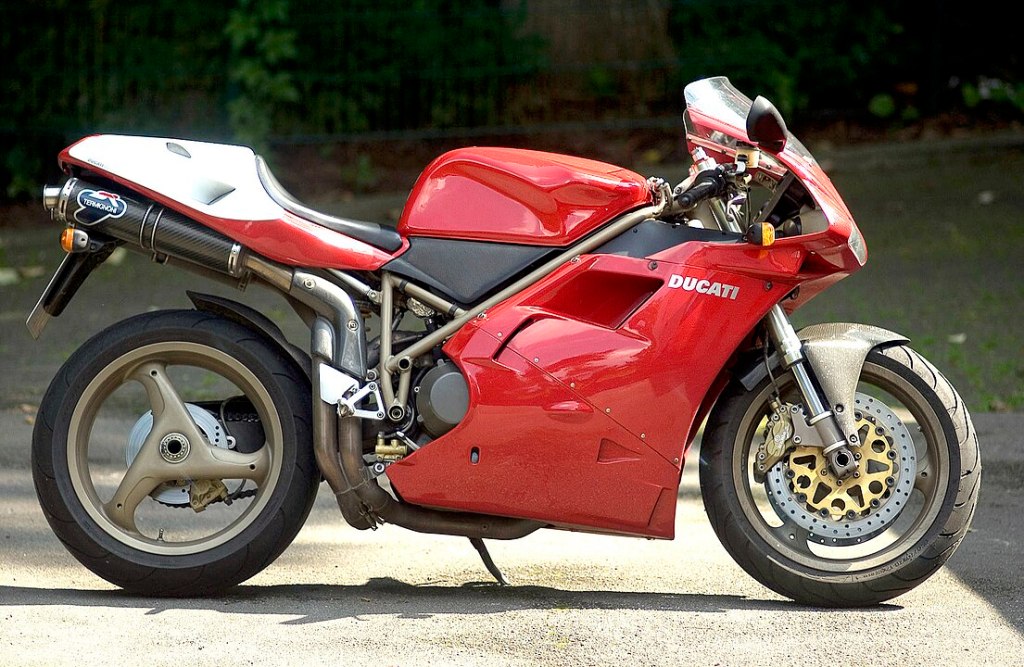

The Ducati 916 and MV Agusta F4 are both products of the 1990’s that somehow still look modern, and Tamburini is largely responsible for both. The important part though, is that Bimota started in the 1970’s because motorcycle frames were crude, and they could build something better than major manufacturers were willing to mass-produce, then shoehorn in someone else’s engine. Poof: infinitely better handling motorcycle.
Bimota still does the same basic thing, using Kawasaki engines because the Japanese company owns a large stake in Bimota. That Kawasaki/Bimota relationship is exactly what gave me my idea. You see, in WSBK Kawasaki has decided to pull out of competition, and insert a Bimota factory team in its place. That will help with Bimota’s brand-awareness and heighten their pedigree of building high-end, well-handling, race-bred motorcycles.

It’s a smart move all around for both brands (and exciting for the WSBK series), but Bimota and Kawasaki also have a connection (and therefore matching interests) through a former racer by the name of Anthony Gobert. Known as “The Go-Show,” Gobert was a wild-man on and off the track. He got his professional start racing Kawasaki’s in the 1990’s at only about 19-years-old (though he had raced in national series’ in his home country of Australia before that).
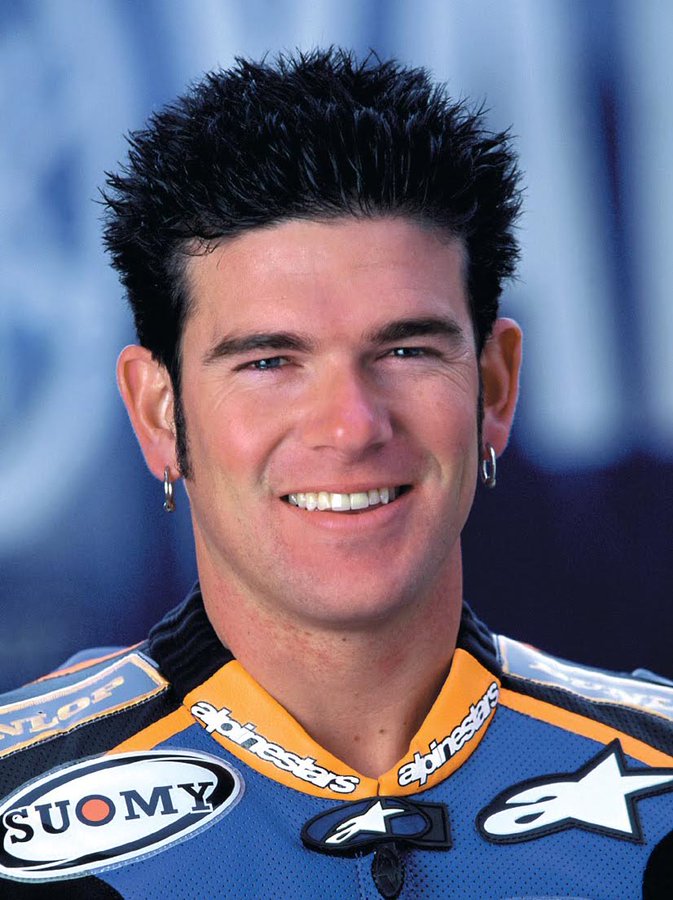
He was well known for his wild style of riding: just a proper adrenaline-junky with immense natural talent riding way over his head but somehow making it work. That isn’t far from the truth though, as Anthony struggled his entire life with alcohol and drug addiction. Failed drug tests got him fired from several teams in several different series over the years, but his natural talent would usually land him another ride.
And so it was in 2000, after bouncing around between teams, that he found himself racing a Bimota in WSBK. The underfunded team was destined to fold before the season was over, stricken by a combination of a non-paying sponsor, a massive failure by one of the street machines they were selling at the time, and the economics of trying to sell $30,000 motorcycles when high-quality Italian motorcycles like Ducati’s 996 were selling for about $17,000, and a Japanese sport-bike went for about $10,000.

Despite it being the end for Bimota, they did go out with a bang. While being small and underfunded against the other factories, Bimota and the Go-Show won his home race at Phillip Island, Australia at the beginning of the year. It is still the last time a Bimota has won a race on the world stage [they did briefly return in 2014 and won some races when WSBK created a sub-category called the EVO class, but there are several caveats], so it’s a pretty short leap to go from “Bimota is re-entering WSBK” to, “when was the last time that happened?”
Why This Matters
So if both Kawasaki and Bimota have a direct connection to Gobert from that era, and they are now partners in business, and they are about to essentially swap places so Bimota can carry the banner in WSBK, it’s quite a no-brainer to think about the Anthony Gobert connection — but there’s another reason he was already fresh in my mind: he died back in January.
Gobert never did come to terms with his wild-child approach to life, and chased the next buzz well after he was no longer getting a buzz from racing bikes. At age 48 he finally ended his wild adventure on this Earth, on January 17, 2024, from an undisclosed illness. As someone who struggles with addiction myself, as well as a person who has chased the high of racing a motorcycle in competition, I certainly have strong feelings about the loss.
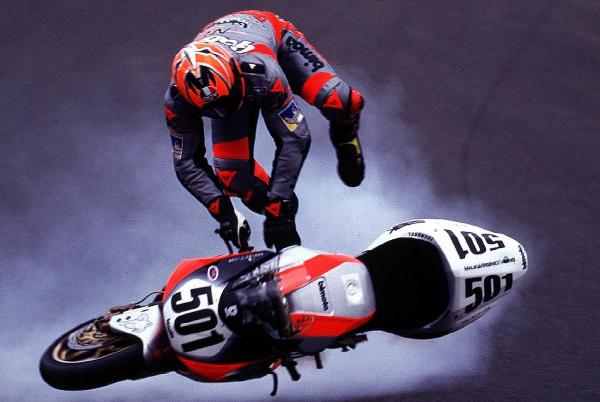
Despite that sadness, I also can’t help but see opportunity in the changing fortunes of Bimota. Coming back on the world-stage, they are still a small company despite backing from Kawasaki. After several bankruptcies and attempted rebirths, they are back to building extremely high-end, hand-built sport-bikes, in numbers so limited you are not likely to find one in a dealership (you basically email them directly and get them to wake up the magic elves that produce these exotic machines).
That’s a tough way to create the capital necessary to field a race-team, but it creates opportunities to build instant collectors-item motorcycles, because ALL of their bikes are limited production. They knew this back in 2000 and commemorated their win with the SB8R Gobert (the one pictured above next to the race-bike is of course a Gobert edition, with several different trim levels and color options for the other versions).
A Chance To Do More Than Sell Motorcycles
And herein lies the central thrust: build a Gobert edition bike not only to celebrate Bimota’s re-entry into WSBK — and not only to honor their last race win — but to remember the racer who managed to pull off that win: Anthony Gobert. Even more than paying tribute, there’s a chance to do far more than slap stickers on a current model and jack up the price even more.
If you’re already selling these high-end, low-volume types of machines, you are creating something rare and special by definition. The Go-Show was rare and special in his own way, too. Why not take the natural step and donate a portion of sales to addiction recovery assistance? You can go even further if you have ambition (and Bimota is clearly an ambitious company).

Run a limited number of Go-Show edition bikes each year and start an Anthony Gobert Foundation. I’m not saying a manufacturing company should branch out and start running their own recovery centers mind you, but fund-raising into a foundation that then partners with established charities and causes, already working with addiction recovery, is an easy pathway.
There are private and public hospitals, research centers, and outreach programs for young people most at risk of being claimed by addiction. Sure, it would be nice to imagine some center that turns at-risk youth into professional motorcycle racers, but I’m not talking about something so expensive and involved. After all, Bimota went bankrupt in part by being too ambitious — trying to make their own engine in-house and having several recalls and delays in delivery. Let’s not get too ambitious…

However, a persistent charity that raises money for other charities and research centers isn’t going to distract from the business of making and racing motorcycles. If anything, it allows them to hang their hat on something other than making extremely expensive motorcycles for the uber-rich enthusiast. There’s nothing wrong with making things for uber-rich enthusiast mind you, but if your average client is well-monied, you already have a connection to a world-wide list of people who probably make charitable donations. Why not tap into that resource for a Go-Show foundation?
Literally use the vehicle (Go-Show edition Bimota’s) as a vehicle to enter the conversation of an often-overlooked topic: addiction. We all know people with addiction issues. It strikes rich and poor, men and women, old and young, and it can be found on all continents. It even strikes the strong and the weak: so many retired professional athletes struggle to replace the excitement of competition with something, turning to gambling, drink, drugs, or other risky behavior in the process.
So why not do some good while doing some good? Kawasaki has a direct connection to Gobert and to Bimota. Bimota owes its last win to the Go-Show, and they are re-entering the same field of competition as their last win. Gobert’s death is a recent memory and his life is one worthy of remembering. For all its faults and foibles, the life of Anthony Gobert was a high-speed adventure.
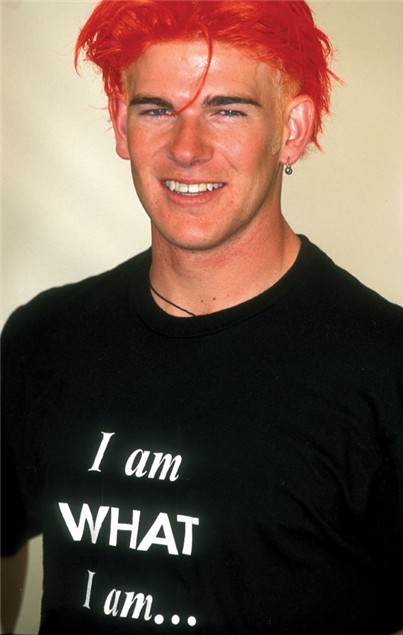
 Johnny Killmore