

Don’t ask me, man… I just work here.
There is little to update, as the last week has just been a long interstate burn. 500-mile days for three days straight, then hanging out on a cot recovering. I’m at the jump-off point of my 2024 road trip, even though I put about 2,500 miles on the odometer so far.
That should explain why I decided to bring the big bike this year, as there is much more open space to cover. There are still over 1,300 more miles to go before I hit the Canadian border, but I’ll at least start using back roads to get there, availing myself of road-side oddities, historical markers, and small, independent shops.
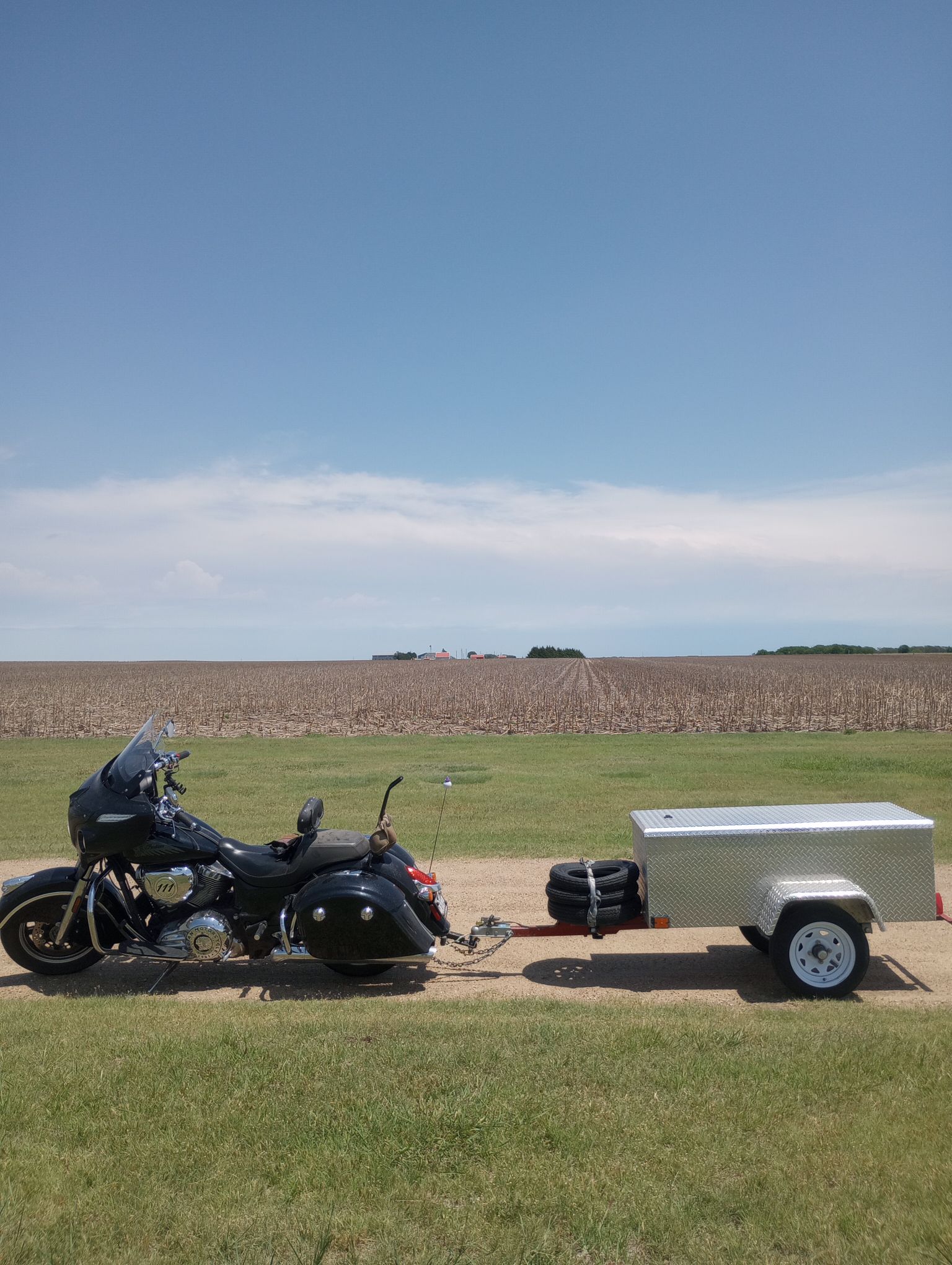
Most of Kansas meets the stereotype, but like all stereotypes, there are many exceptions from the rule that Kansas is full of flat, cultivated land. But yes, there is plenty of that.
That change in pace is a requirement to the change of mindset needed to truly be “on the road” as opposed to “getting someplace.” On roads built for local traffic, it’s not just the number of cars that change. Those cars or full of people “getting someplace” just like on the interstate, but it is probably a place they go regularly. It’s there, and it will still be there when they arrive. No need to hurry…their trip happens all the time.
For a traveler it is of course all new, but at that slower pace you are able to see things with a different focus than the person just trying to get to their destination. On the interstate you are seeing new things, but you also get a sort of artificial repeat. Exits look the same: oasis’ of chain restaurants, motels, and gas stations. The same brands of truck stop of fast food are designed to give you familiarity, so as to facilitate a quick stop.
I often use the chain of Maverick “Adventure Stop” gas stations because they are pretty large but not overwhelming like popular truck stops of the Buc-ee’s chain that’s popular in Texas and some of the middle states. Almost every store is laid out the same and I can unconsciously enter and bear right, knowing before I see it that the restroom sign will be over there somewhere.
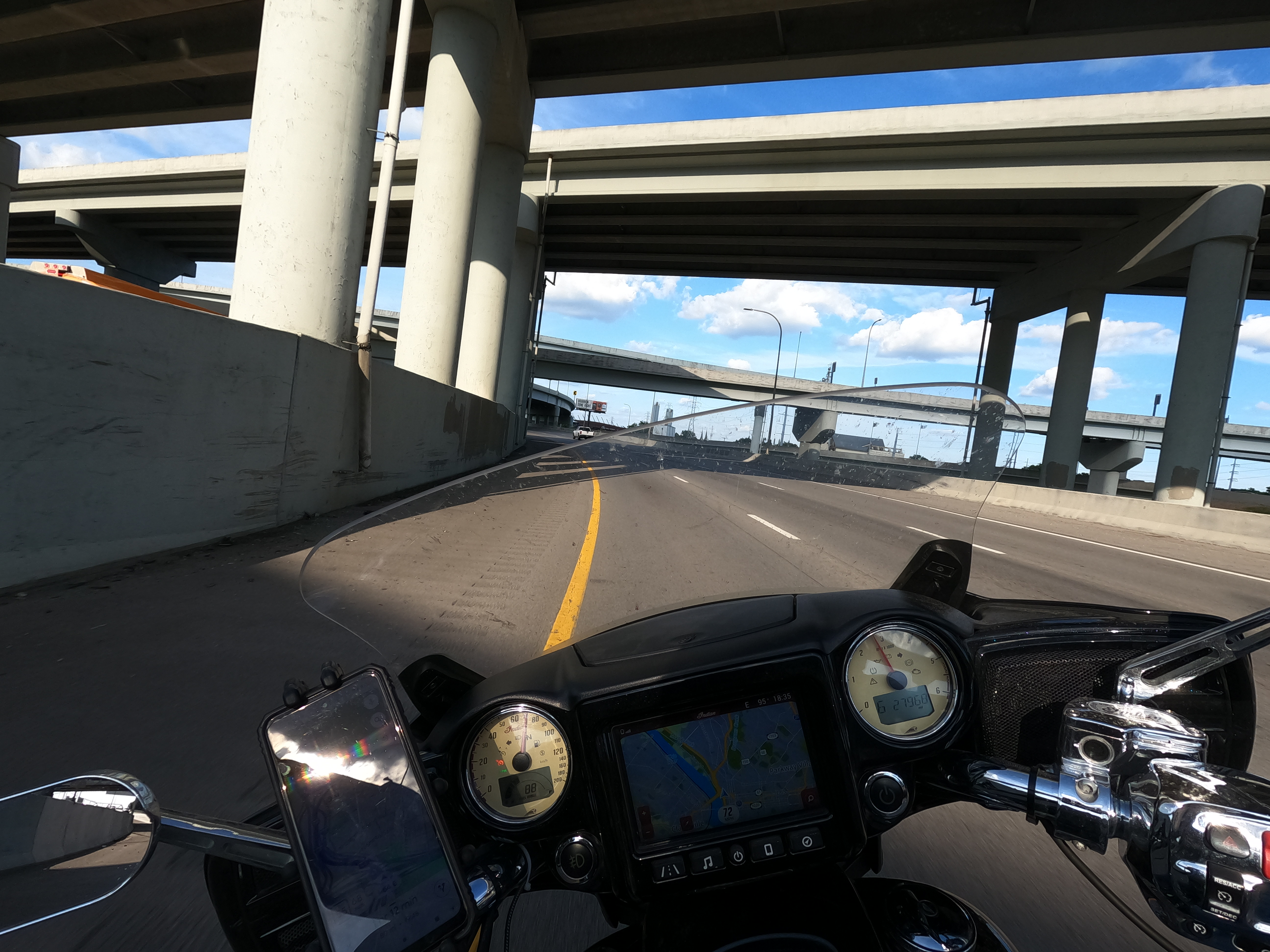
But as I see it, travel is about the opposite. Traveling for the experience of it means being conscious, not unconscious. It means seeking the novel, not the familiar. To be in search of something new, or at least searching for a new perspective in the familiar, is a requirement to separate travel from a commute. And while I did look for this in the last few days of harried interstate flight, I mainly set the cruise-control and put my brain in standby mode.
When I left Arrowhead Mountain Lodge I simply back-tracked up a familiar stretch of highway to Interstate 70. As far as interstates go, it’s hard to beat I-70 through the Rocky Mountains, but it’s still interstate. It’s also interstate I used each of the six times I raced the Pikes Peak Hill Climb, among other trips to or through Colorado. So it is beautiful, curving, engaging, but still a familiar slab of concrete forcing its way through the land.
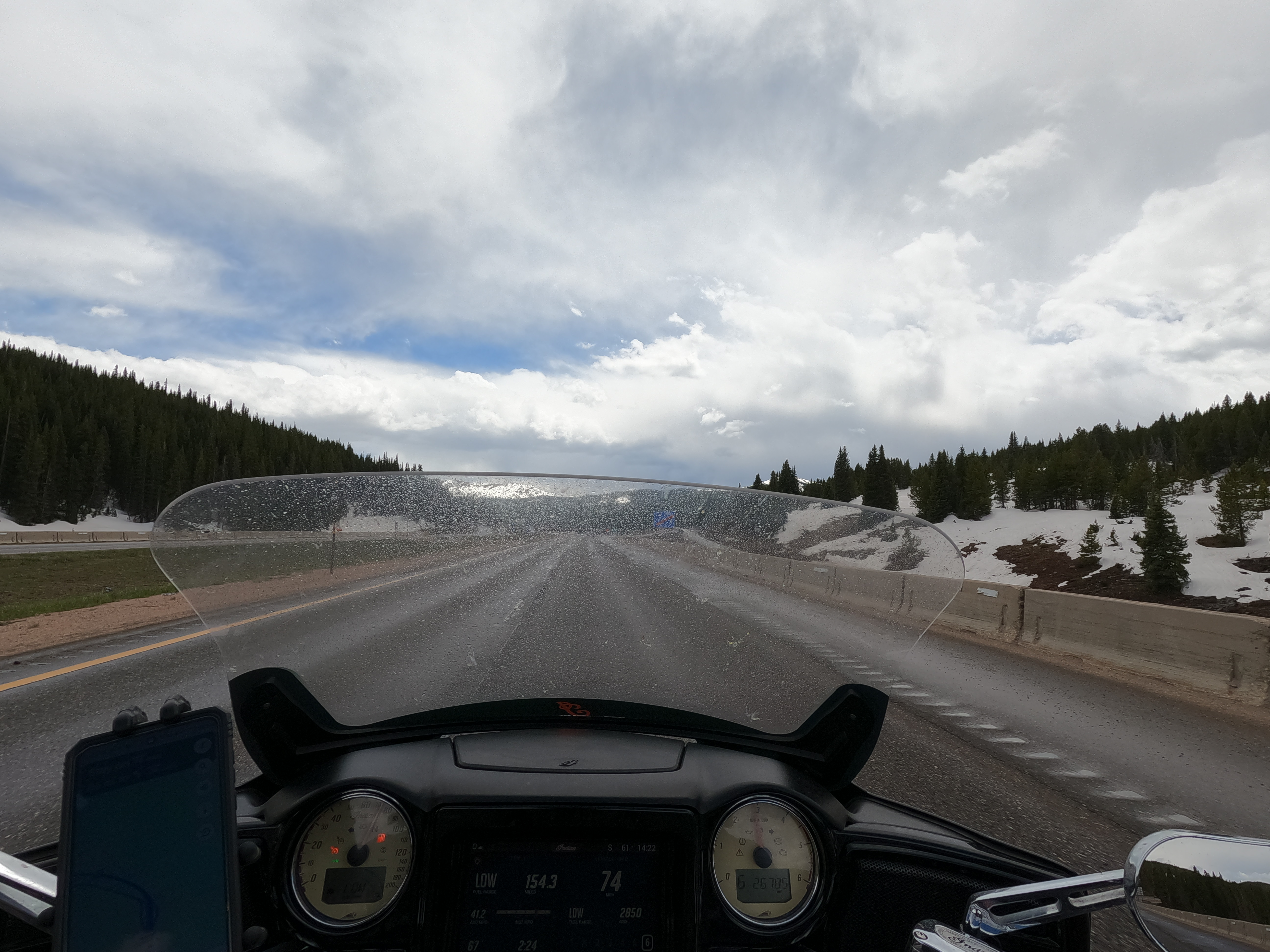
A lot of people also don’t realize how flat much of Colorado is. Look at a terrain map of the state and you’ll realize Denver is built on the edge of the Rockies, and that a huge chunk of the state keeps extending out to the east, and it looks a lot like Kansas, which is famous for being flat. The western part of the state also has a lot of high plains, meaning on I-70 — by design– you cut through the narrowest portion of the Rockies you can. Somewhere in the flats of eastern Colorado I ended another day, eating gas station hot dogs and sleeping soundly.
And then, back onto the flats. Kansas isn’t as bad as people like to make it out of course, and if I were there to inspect Kansas specifically there is a lot to see. There are many old churches, small towns, historical sites, and museums to visit. There are plenty of rolling hills and if you stop to admire the view it can be nice, but of course you have to use a critical eye to spot the details.
Much the way a desert can look barren at a glance, until you realize all of those gray-brown bushes are living things. Then you see a bird fly from one to another and notice several birds chirping at each other. If you get off the paved roads you will flush a rabbit and several lizards, and soon realize life is everywhere.
Kansas does the same thing, mainly because cultivated fields all look the same. Whether out of seed during crop rotation or planted for wheat, there isn’t much to look at. The “amber waves of grain” from old songs were not written about the cultivated varieties of wheat that now only grow knee-high and don’t move much in the wind (they can also be machine harvested after rain, where the tall wheat you get trampled flat by hail and turn to mush in the muddy ground).
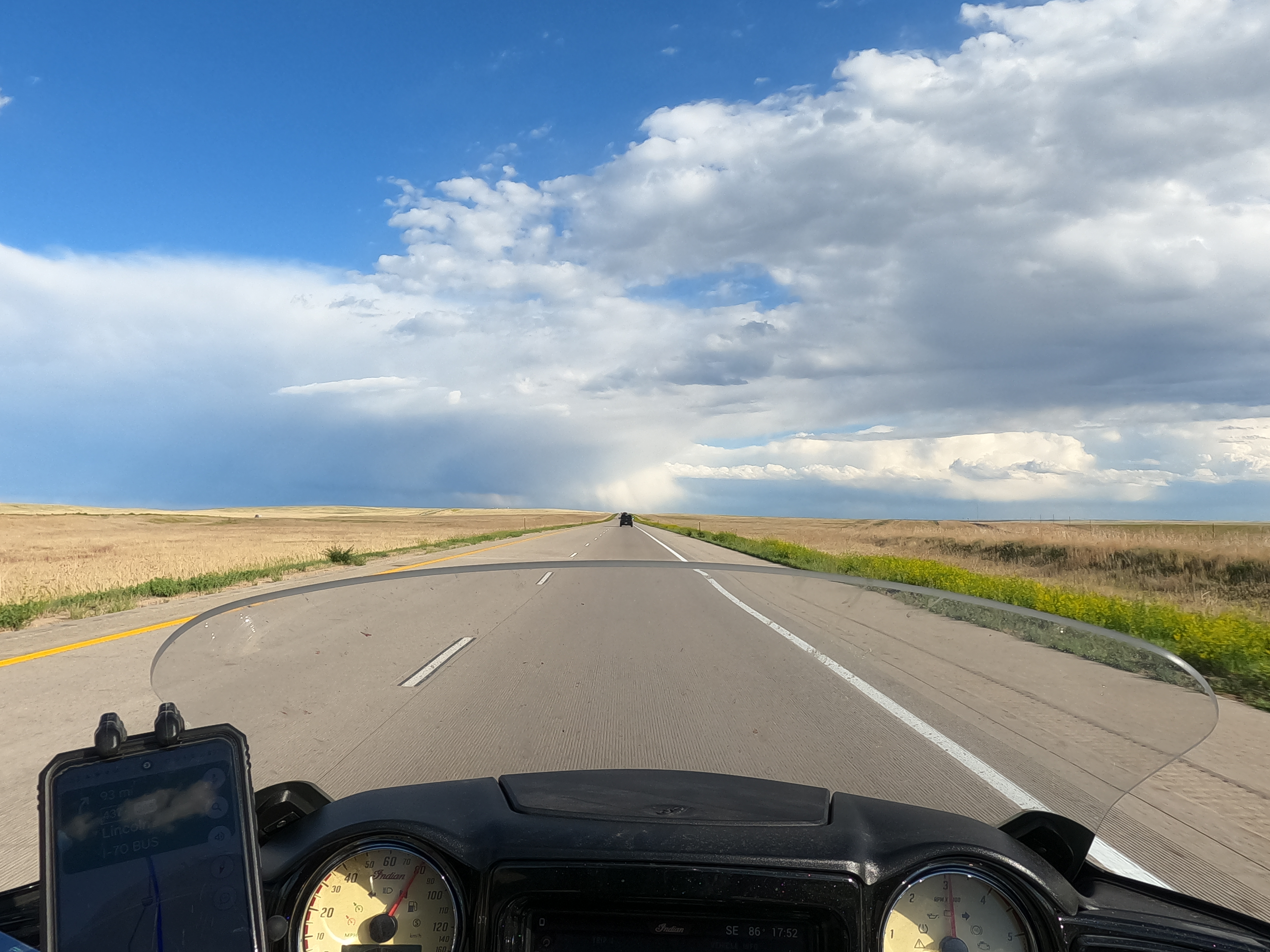
Country like that also made me realize the practical need for churches to have spires. Back in a world where people didn’t stray far from home there was little need for road signs, and a wanderer would have little idea of where the next town was unless he got solid directions from someone in the last town. If you’ve ever traveled in that manner though, you probably know there are forks in the road locals don’t bother mentioning, and a traveler must be wary to stay on the correct path, even with good direction, or even a map.
A church with a tall spire is visible for dozens of miles on the flat Kansas plain, and even on the rolling plains they still act as a beacon that you are heading to respite — to civilization. The St. Fidelis Basilica managed to do that, even from the interstate as I flashed by at 75mph. Built in the early 1900’s, it sat several miles off the interstate and still stood out on the horizon better than the shining metal grain silos that usually signal a town in the distance.

I didn’t have time to go in though, which is a disappointment given what photos online show the interior as. But I had miles to put in. I also couldn’t afford a detour to the Kansas Motorcycle Museum, but photos of it also impress — especially considering it is in an extremely small town, far from the interstate.

In any event, I stormed through Kansas City and kept the hammer down before reaching Boonville, Missouri and a chain hotel, in an oasis of other chain stores. The town itself was just a few miles to the north, and was likely worth a visit, but not after 500mi on the mind-numbing interstate.
From Boonville it was a long run up and over, picking up I-64 in St. Louis but still crossing southern Illinois before crossing the Ohio river and dropping into Louisville, Kentucky. They sure seemed to have a lot of baseball stadiums, and I wondered if the baseball bat company set up there because of it, or if the teams came because of the Louisville Slugger?

Either way, I enjoyed the skyline as much as I could while looking out for traffic, road hazards, and interchanges. Then I popped out of a tunnel and was on the final stretch to Lexington. It seemed a straight shot, but road construction dropped things to one-lane several times. Despite slowdowns and the time-zone change I was into Lexington before the sun was too low.
I’ll be here about a week, catching up with family and ordering just a few final odds and ends. The bike will get a proper wash and another check over, even though it needs nothing and shows no signs of trouble. I already got new tires installed on the trailer, which were in need before I even left Bisbee, AZ. Once I’m refreshed, re-equipped, cleaned up, and loaded up, the “real” trip will begin.
It will involve just a few hours of interstate, and once I’m up into the lower parts of the Appalachian mountains I can branch of and follow the roads that follow the terrain, instead of cut their way through it. I’ll continue flowing on the red and gray roads (if you don’t remember paper maps that might not make sense).
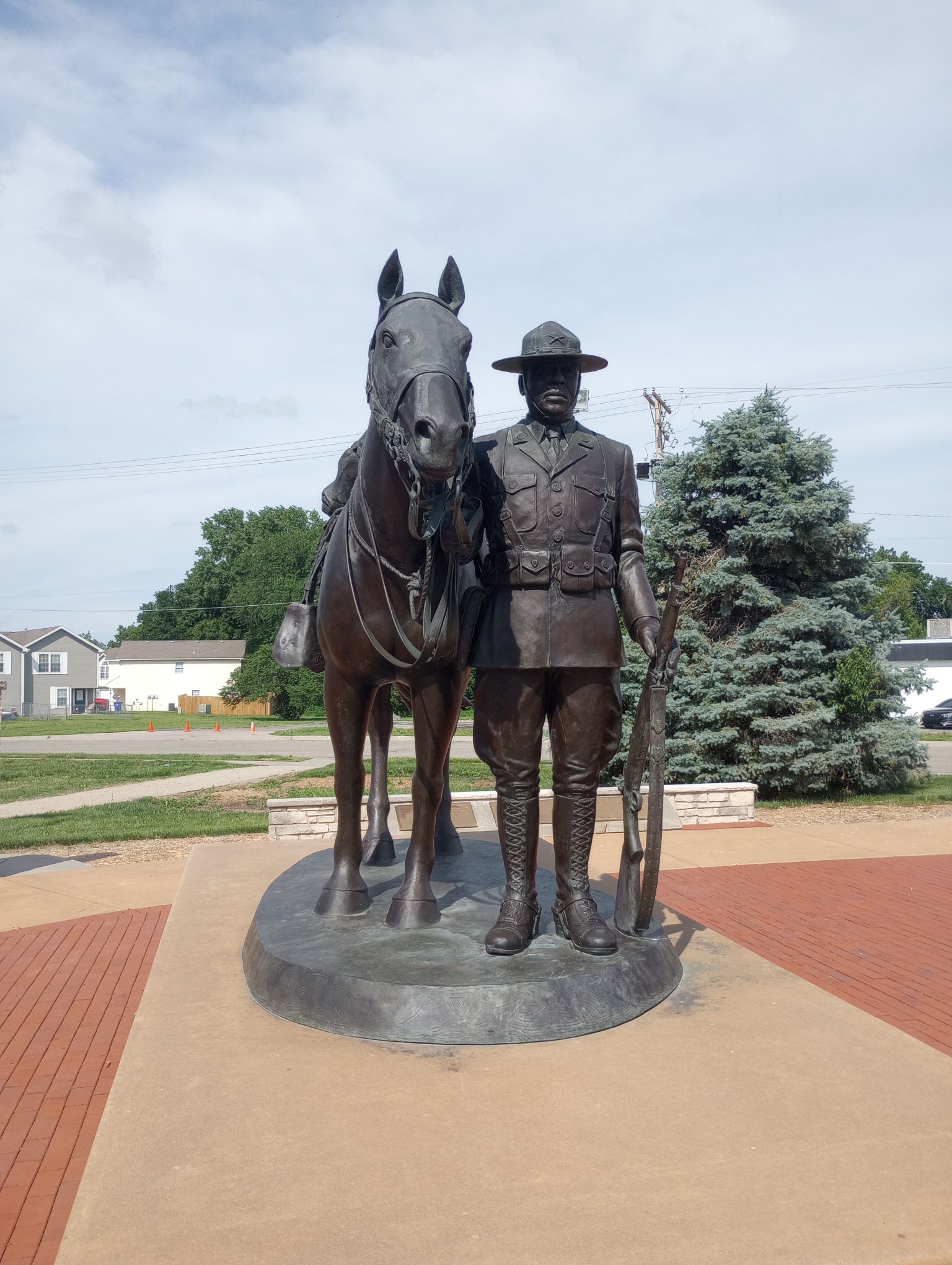
As I said about Kansas, if you just get off the freeway there are gems all around, like this memorial to the Buffalo Soldiers in Junction City, near Ft. Riley.
On those roads you meet other travelers, locals on their “getting to a place” trips who like to talk to strangers admiring some scenery, mom-and-pop shops and diners, and the essence of what it means to create a community, and maintain one against a changing world. I hope to see it, experience it, photograph it, and report back on it. It’s what I do.
So, if you haven’t already signed up, I reckon now is a good time if you are interested in investigating what it means to be a human, by experiencing and trying to understand what it means to be human. It will be disguised as a travelogue and factoids about local, regional history, but it’s a deeper inquiry. The mailing list just takes any new blog posts (when there are any), and forms them into a list, then mails the list out on Sunday mornings.
That’s it: just a weekly reminder that there’s new stuff to be had here on the blog:
New stories, new places, and the same investigation into existence, meaning, purpose, community… an investigation not into what is important, but what importance even is. In the mean time we’ll also find some good food, stunning views, covered bridges, abandoned roadways, ghost towns, almost-ghost-towns, natural wonders, and a few old post offices.
Better to dream of a better world by deciding what a good world looks like, instead of looking at the things you don’t like about this world and trying to remove them.
 Johnny Killmore