
I’ve really lost track of time. How did September get here so quick? I can’t tell if I’m behind schedule or not, because I had no plan after seeing the Mars waterbomber land. I knew I’d explore Vancouver Island after that of course, but I had only vague plans and no timeline.
I took the ride up to Port Hardy, where the highway ends. I poked around the coast. I even crossed to the west coast to visit Tofino — a popular tourist spot — during Labor Day Weekend. Right now I’m “in the middle,” both figuratively and literally. I’m not sure where to go next or what to do. I’m sort of centrally located in the island, and just keep staring at maps — zooming in and out.
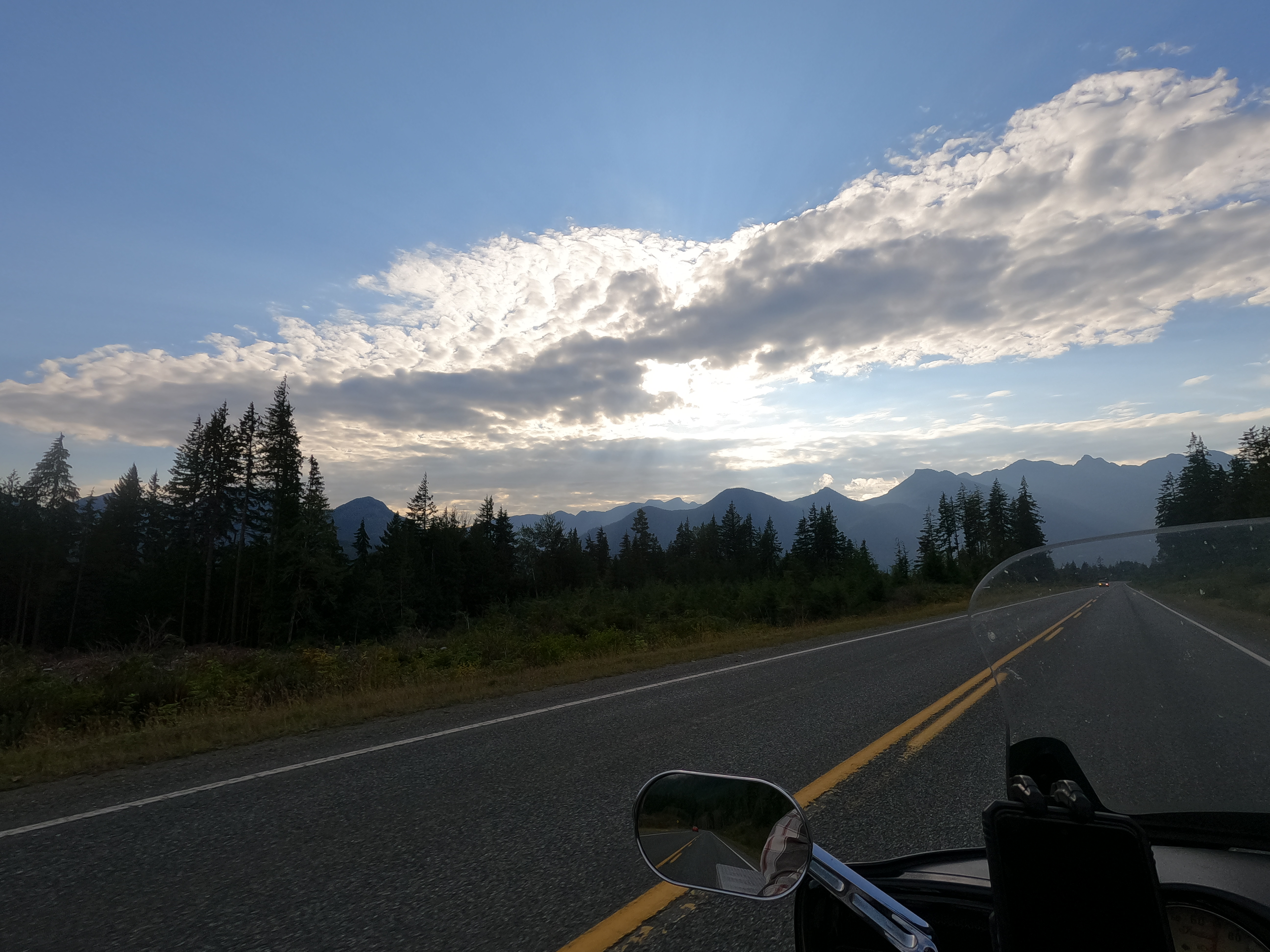
But I do at least have interesting things to share. First, the ride up the coast. I used Hwy 19A instead of 19, which kept me closer to the coast but also with a lot of slow traffic, small towns, and low speed limits. Despite it being nice, it was also repetitive, as is anything if you ride long enough. The road only hit the coastline a few times, and those were great views, but it was mostly just riding between trees.
I did find my first Canadian Post Office worth photographing. It was built in 1913 and disused at some point, but was restored and still operating a a Canada Post. In back was the smallest library I’d ever seen, but it was a small town I suppose. The postal clerk also told me about a floatplane tour you can book — the Historic Mail Route.
 Canada Post, est1913
Basically you pay $325cad and get to fly with the pilot and some mail bags, heading out to the small islands that have very few inhabitants but still have a post office. Of course you aren’t paying to lug mail bags, and you get 20-30 minutes at the (at least) four islands they land at to explore the village.
I made a note of it and kept riding north. The ride was nice, but again it was more about repeating scenery — like a tunnel of trees without a top. When it did open up though, there were mountains with patches of clouds, or swampy clearings where you’d expect to see a moose up to its knees in moss and water. For the record, I saw no moose and only one family of elk, though they were right off the road, only about 15-25ft away from me.
I made a home for two nights in Port McNeill. By random chance there was an all-day music festival happening, but I didn’t feel like being around people. Instead I chatted with neighboring campers, got laundry done, and spent some time quietly sitting at a nearby bar, sampling local food and using the cold as an excuse to have the bartender make Irish Coffee.Having never done it, she took to it like a chemist and made a fantastic one, though she struggled to float the cream (which is really a delicate bit of work).
 On the way up island you will pass the 50th parallel.
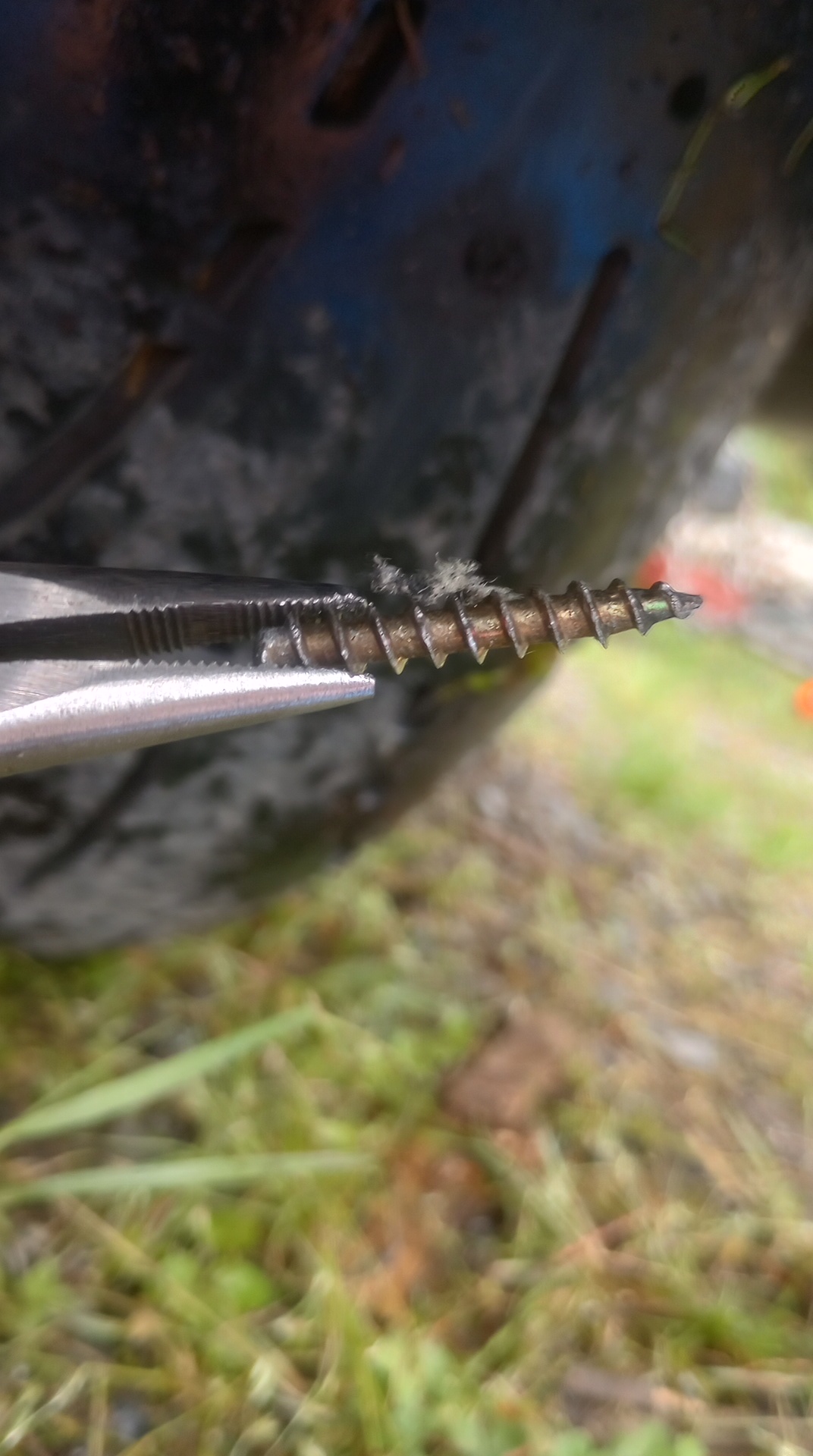
I also managed to get screwed, kind of literally. I found a screw in my back tire. Yep, another flat, on a new tire, after replacing the last one early because of a puncture I just couldn’t get to stay sealed. I plugged this one and tried to forget about it; it was textbook after all. It was centered in the tread, went in at a straight angle, and wasn’t very big.
The rains had come in and soaked everything with a light but endless drizzle. Because of that I found the backpacker hostel in Port Hardy, the tow at the end of Hwy 19. It was only about a half hour away, and the tire held air in that short time, so I stopped thinking about it.
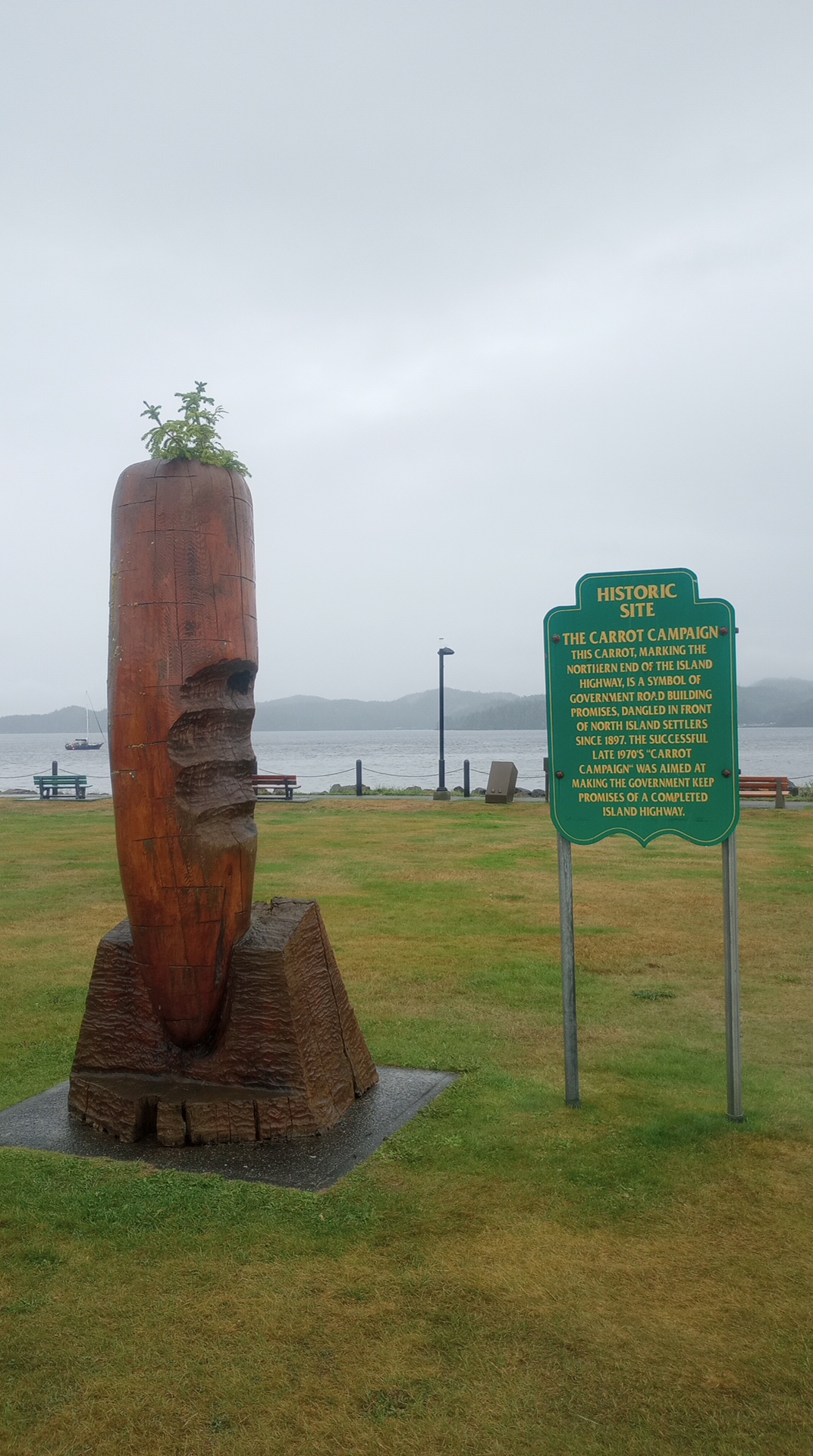
Port Hardy is pretty small, but not as small as Port McNeill. I chose to stay a 2nd night so I could properly dry things out and have a 2nd night in a bed. I went down to the local marina to look at sail boats and small coastal working boats, plus one large ship, and the sunset over the bay. It is an extremely tranquil place, feeling a bit like a large movie set while filming isn’t going on.
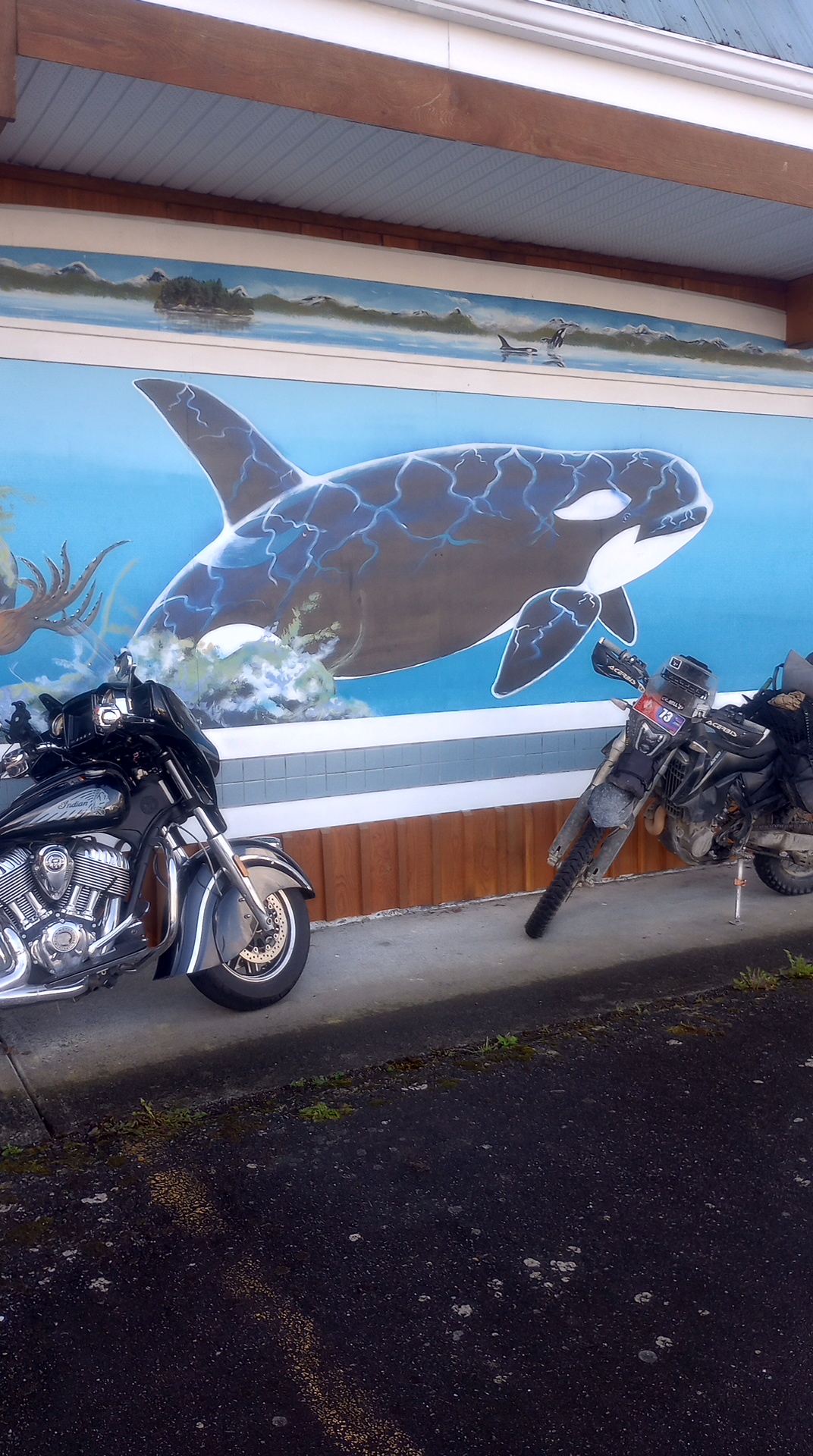
The Chieftain seems to share more of a likeness to the Orca than it does to other motorcycles.
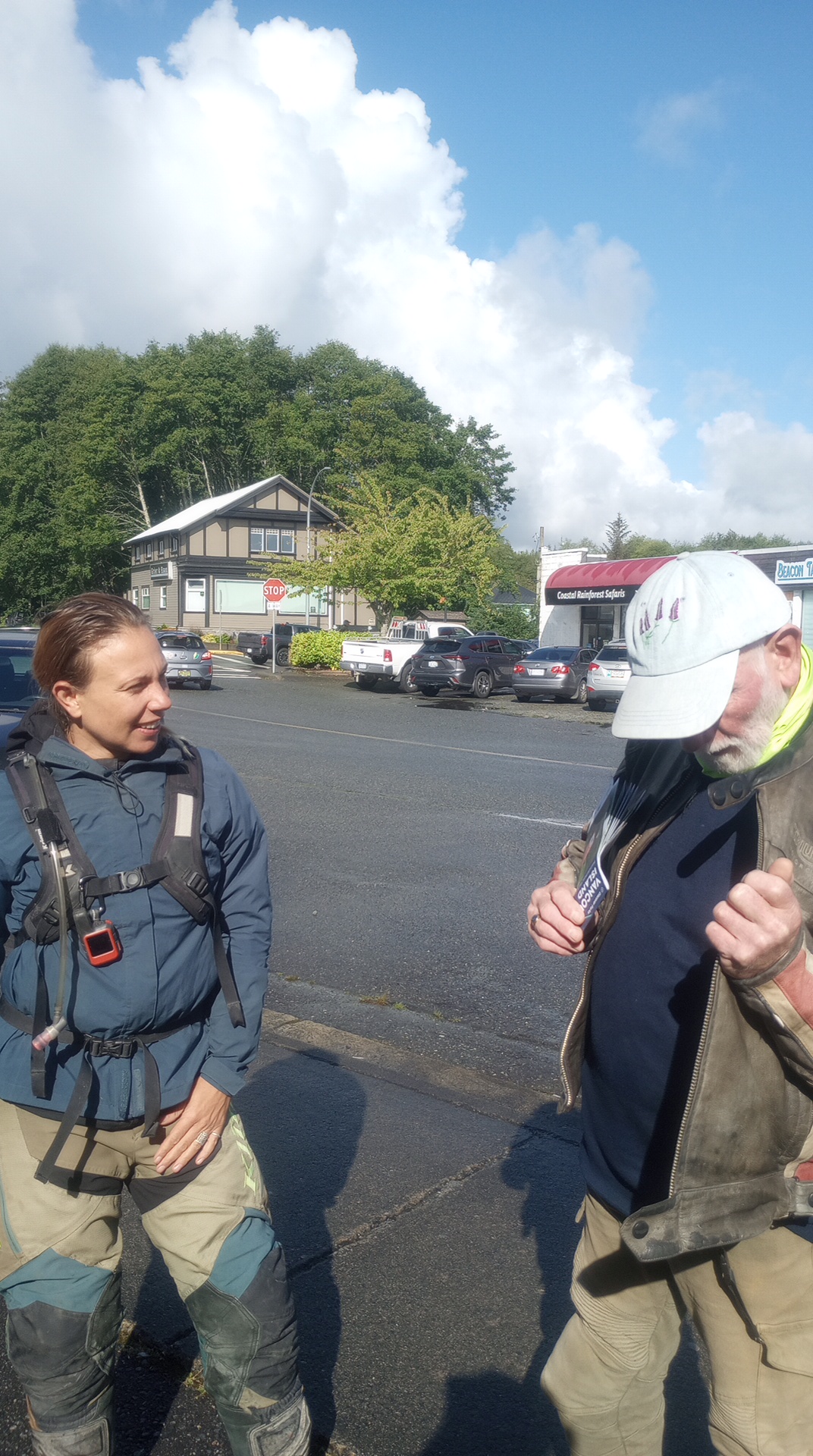
Tired of these tires
The bike had lost air pressure sitting in Port Hardy, but I just filled it up ans carried on. I only made it about 10mi, then the plug came out. While it leaked down slower than the last tire, it still meant pulling over to fix the puncture. While this endless problem with flat tires had gotten old enough for me to just shrug it off, but I actually felt a bit of rage at this point.
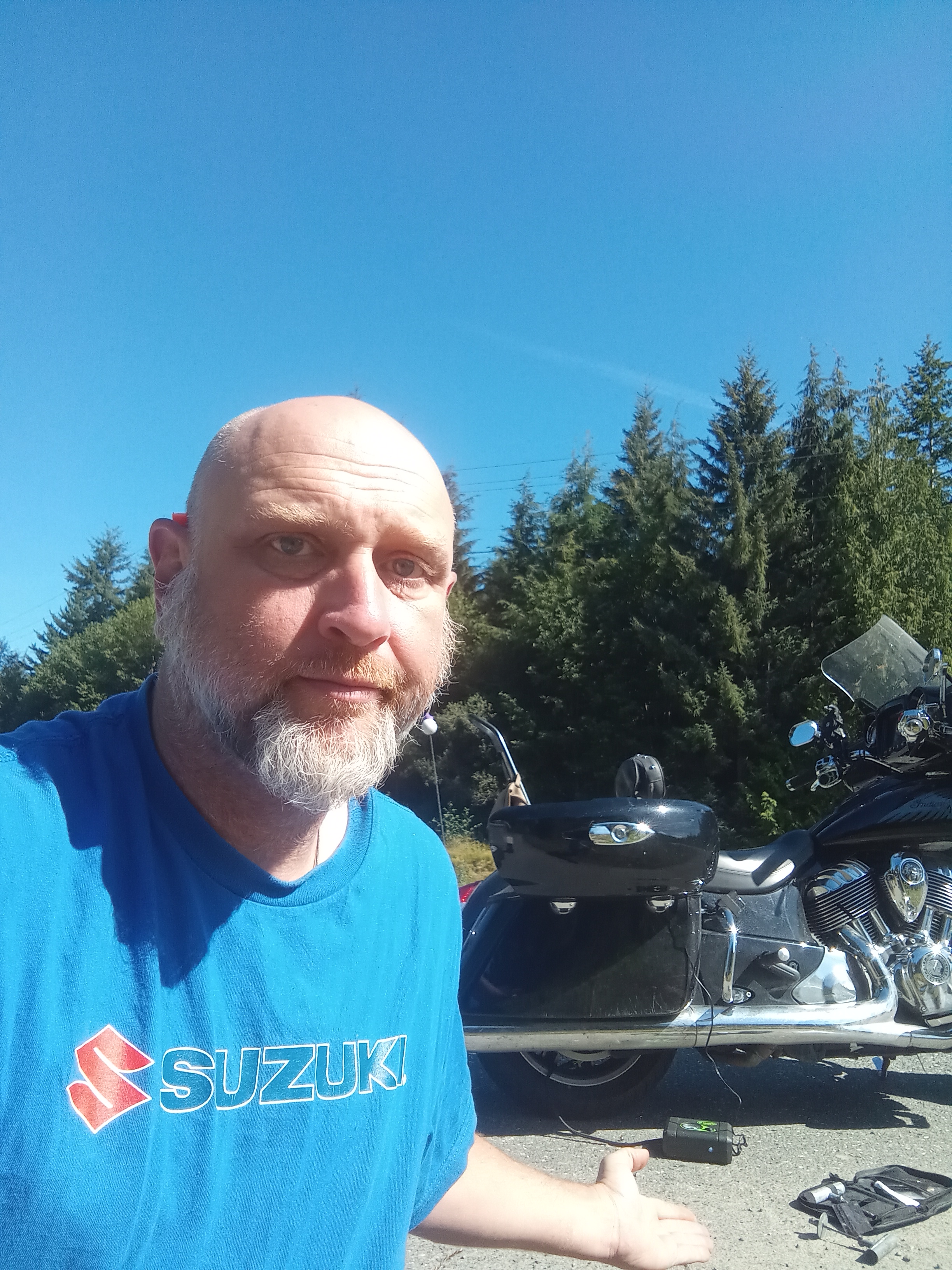
There was no reason on Earth for this plug not to stick. I’ve been plugging car and motorcycle tires for over 25 years, and they don’t come back out unless the hole is massive — usually more of a cut than a puncture. Now I was back to having the plug come out every 10-90mi.
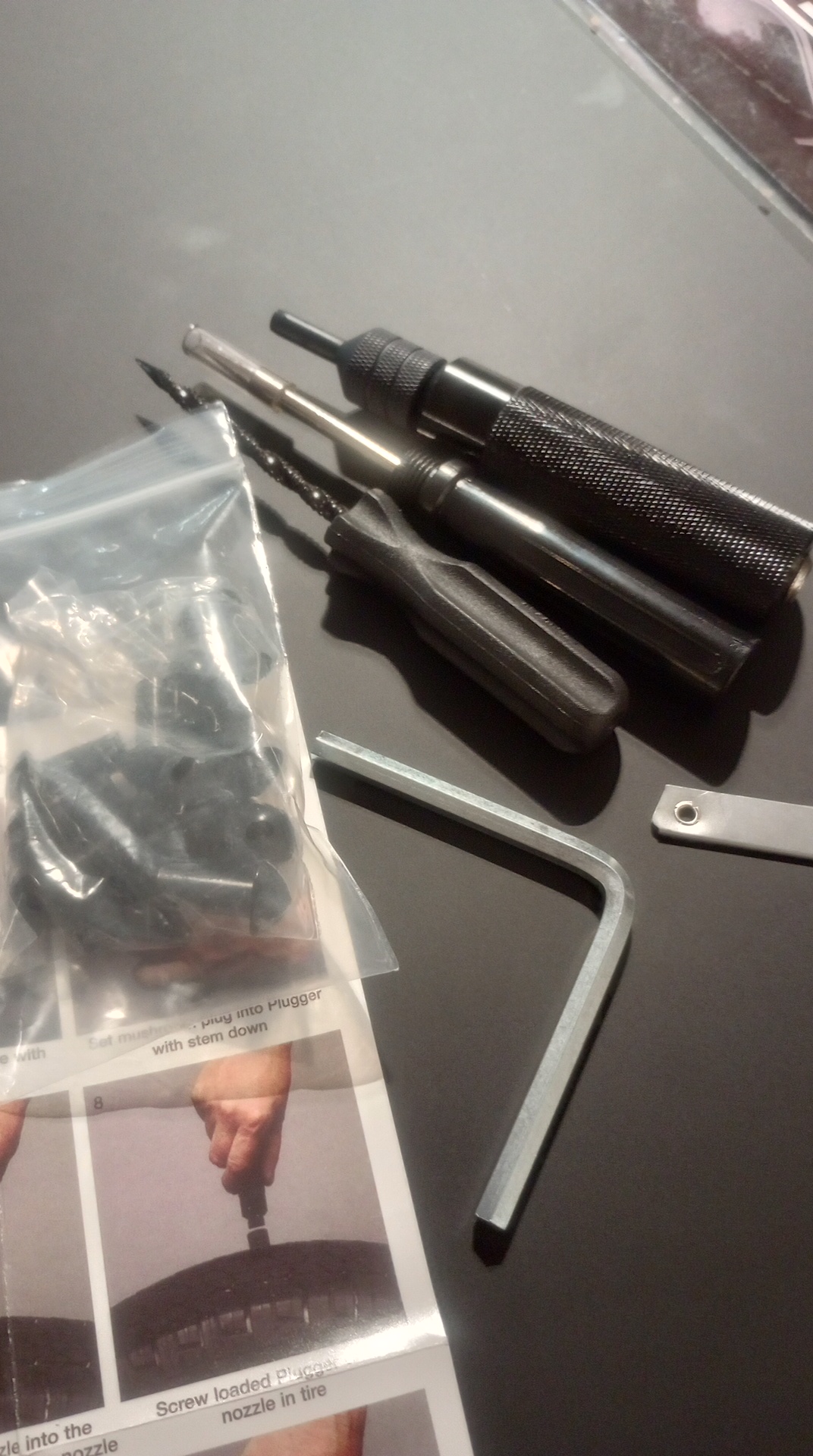
I had one more internal patch, so I called the local Indian dealer about having them remove the tire so I could plug it from the inside. I got the parts dept first, and the guy there said he had a plug kit there in stock that uses the mushroom-type plugs. These are known for staying in much better than the sticky, strip shaped plug found everywhere.
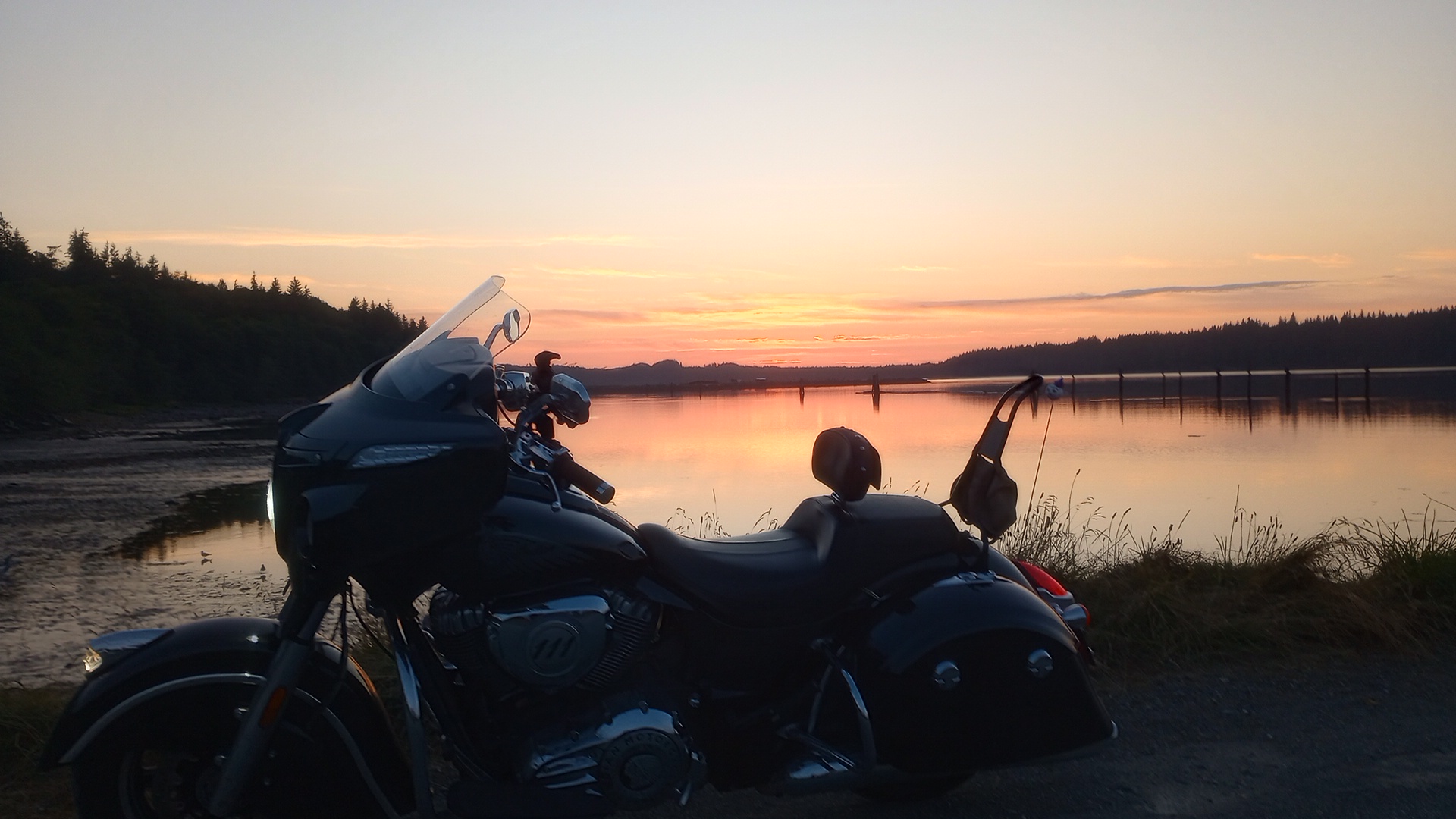
I decided to give it a shot — I could always have them pull the tire off and I’d do the internal patch if this failed. The plug went in with only slightly more fuss than the others, and I was off to Tofino on the west coast.
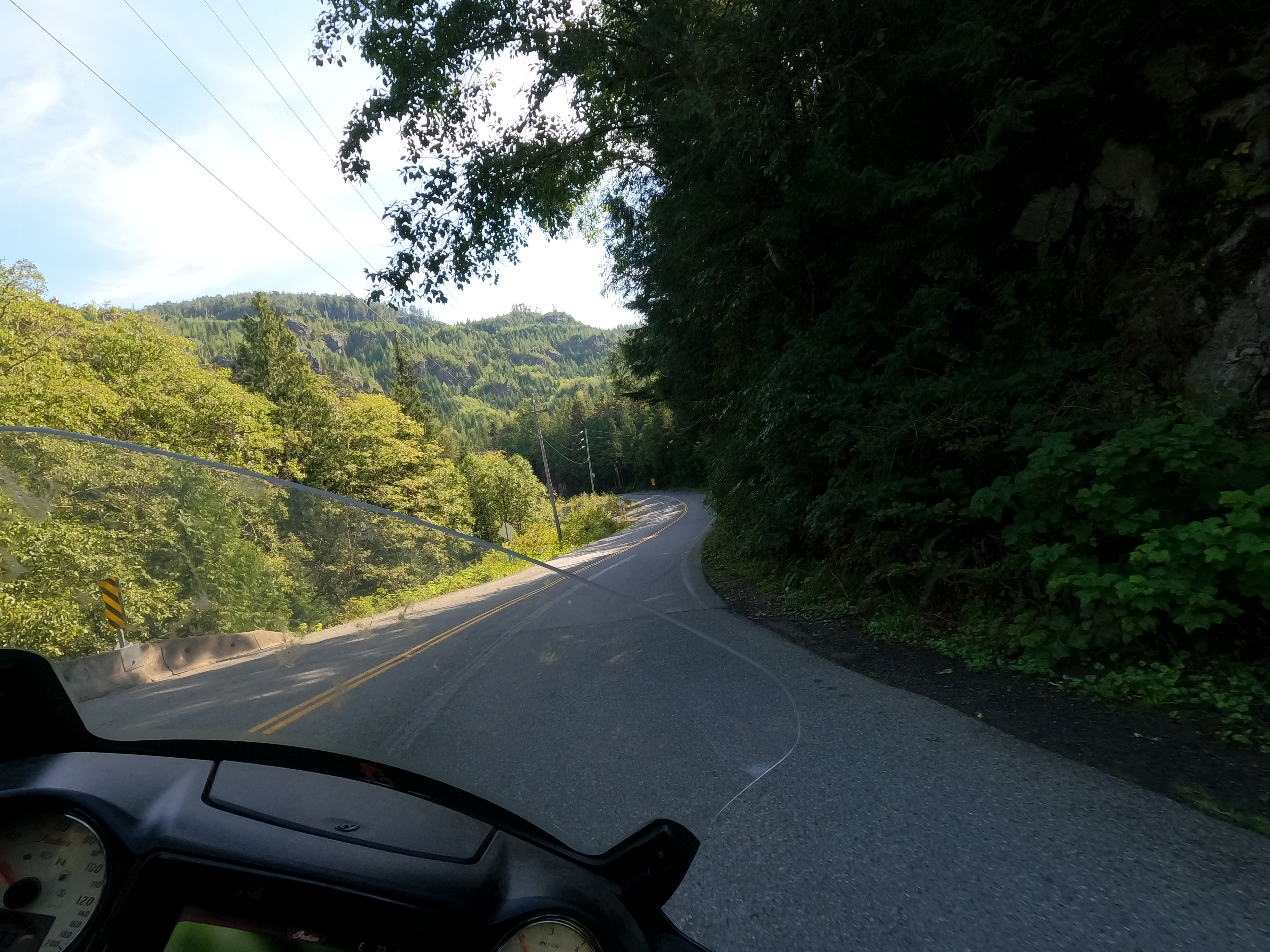
Highway 4 is the only way out there, and it has been the best road I’ve been on since coming to the island. It follows a series of rivers and lakes through a series of valleys and low hills, with mountains all around. The views are great, though you need to pay attention to battered and uneven pavement. Having the trailer behind me, I wasn’t interested in scraping the floorboards through corners anyway, so I plodded along.
Onto the west coast
Ucluelet and Tofino are on a sort-of peninsula — one of many that form the Pacific coastline of the island. Both are tourist traps, and this was Labor Day Weekend. My campsite was at a surf shop, located at the junction of the roads to Tofino (north) and Ucluelet (south).
That made things feel slightly more quiet, but being at a road junction means vehicles slowing and accelerating, too. After heading into town for dinner, I found the first restaurant had a 40min wait. Using my intuition instead of Google’s arbitrary wait times, I went to a nearby pub and found it nearly empty, full of a good mix of locals and tourists considering it was on top of a hotel.
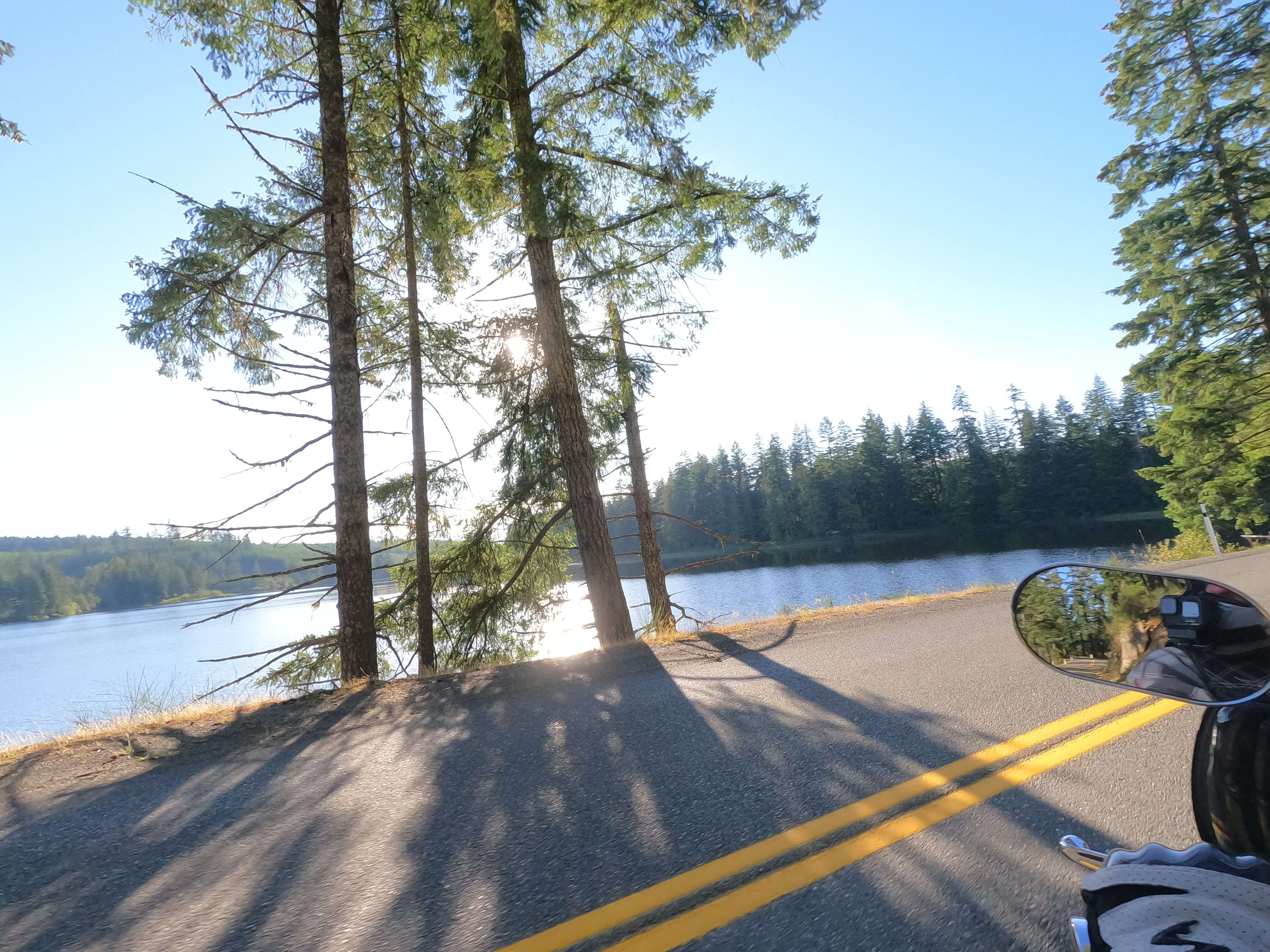
Good burger, good beer, a couple of cocktails, and a sunset along the water. Not so bad I reckon, but sleep that night was hard to come by. I wasn’t able to sleep in either since there were kids in the camground and were awake at dawn to complain about putting their shoes on and fighting with each other over god knows what. Being single has its rewards.
I went for breakfast in Tofino, and the place was crawling with both foot and vehicle traffic. At a small burger spot they were pretty full, but the bar was empty. I found a breakfast burger on the menu and wasn’t feeling adventurous, and stuck with it. I had planned to walk around and explore the town but it was so packed I just went down to one of their boat launches and looked around at the coastline, then back-tracked to Radar Hill.
The Canso Trail
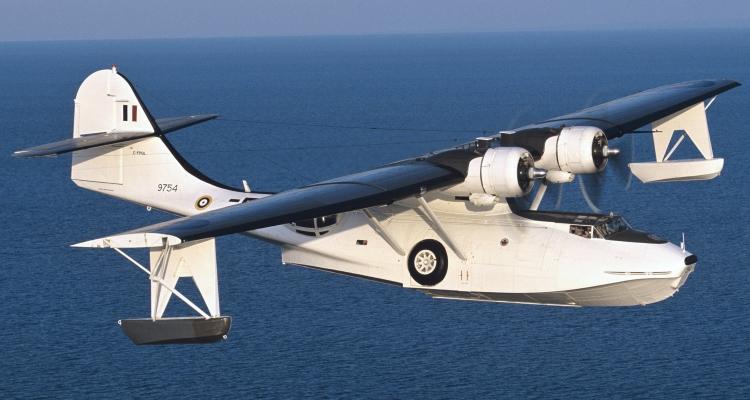
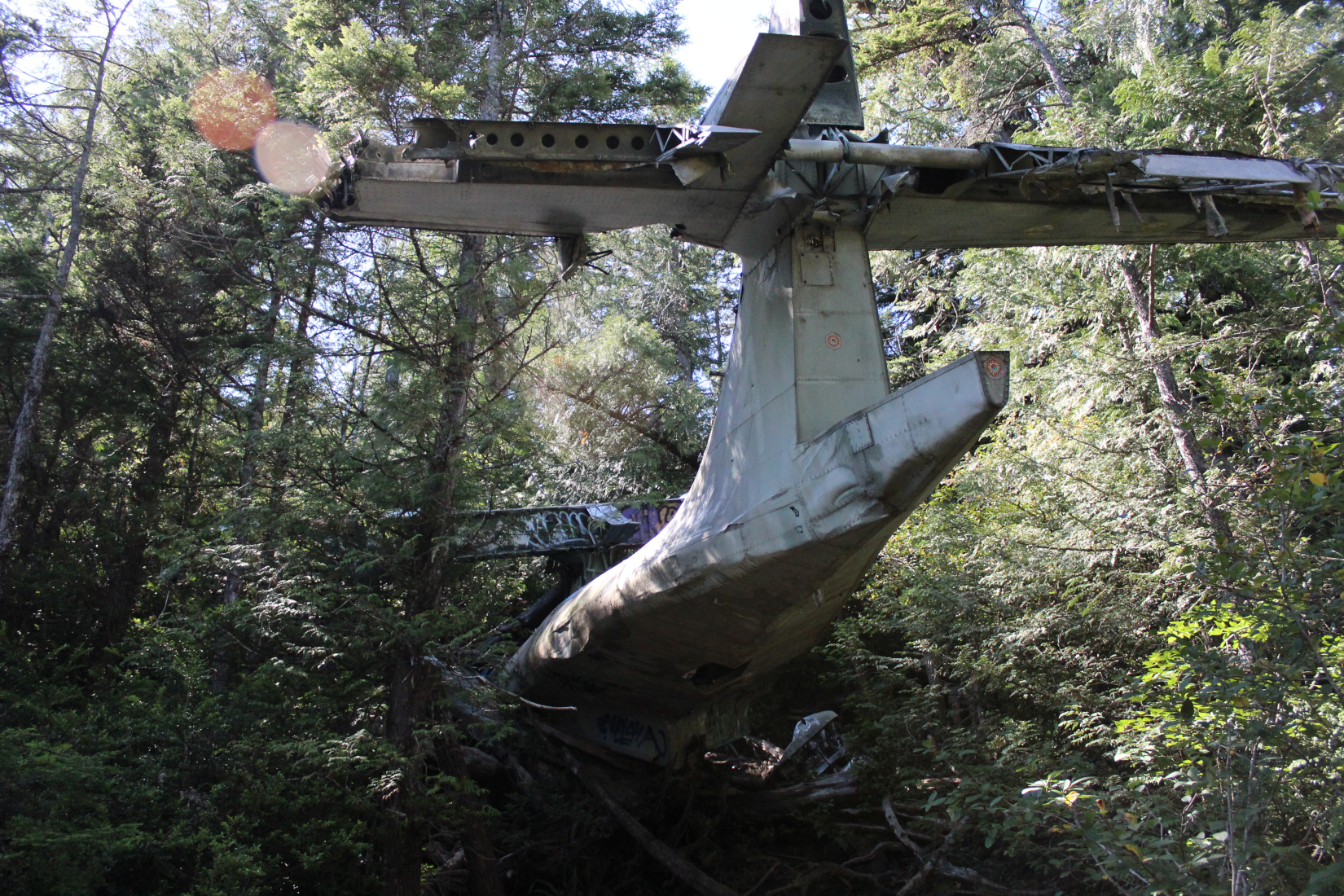
Once a radar station in WW2, the area is now a park, and on the adjoining hill was an 1945 airplane wreck I wanted to hike to. The PBV Canso was a license built version of the American PBY Catalina, a versatile amphibious plane that was a major workhorse in all theaters of operation during the war.
It did search and rescue, submarine hunting and coastal partol, as well as working as a bomber, night attack plane, mine layer, and cargo plane. In short, it did everything, flying from the water or land. But in February of 1945, one of them was doing a routine training mission.
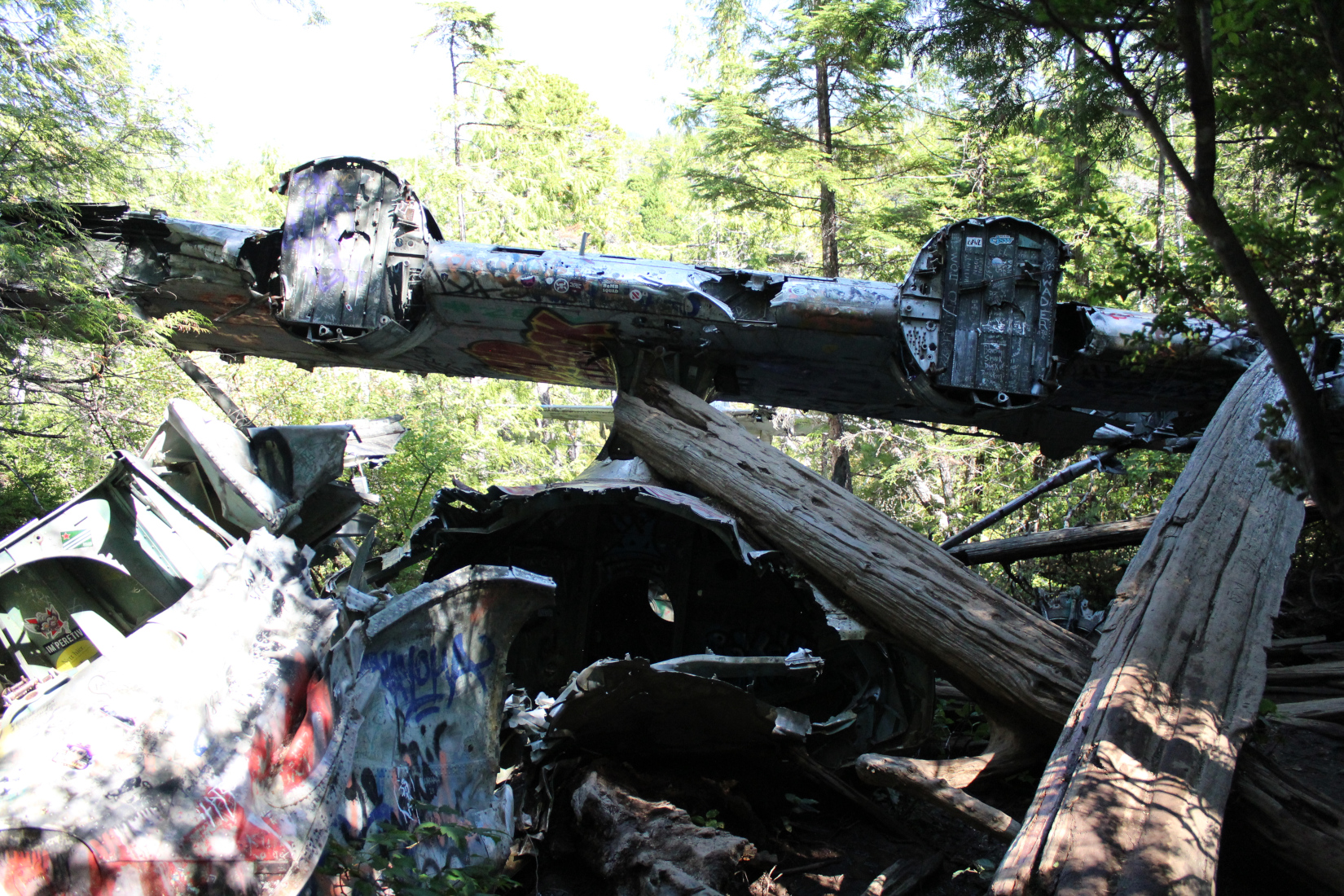
One story is that pilots from a coastal patrol unit were flying around looking for gym equipment for a new rec center. In any event there were eleven people aboard instead of the usual crew of 3-6. They took off from Tofino airport and quickly ran into trouble with the port-side engine. They tried turning back but the aircraft was losing too much altitude as it banked.
Unable to turn around and unable to get over the low mountains between them and the sea, the pilot slowed as much as possible and stalled the plane down into the trees, striking a near the bottom of a hillside. Despite hitting a hillside hard enough to obliterate the front of the aircraft and stand it up on its nose, the plane then fell back into the trees with all eleven aboard surviving.
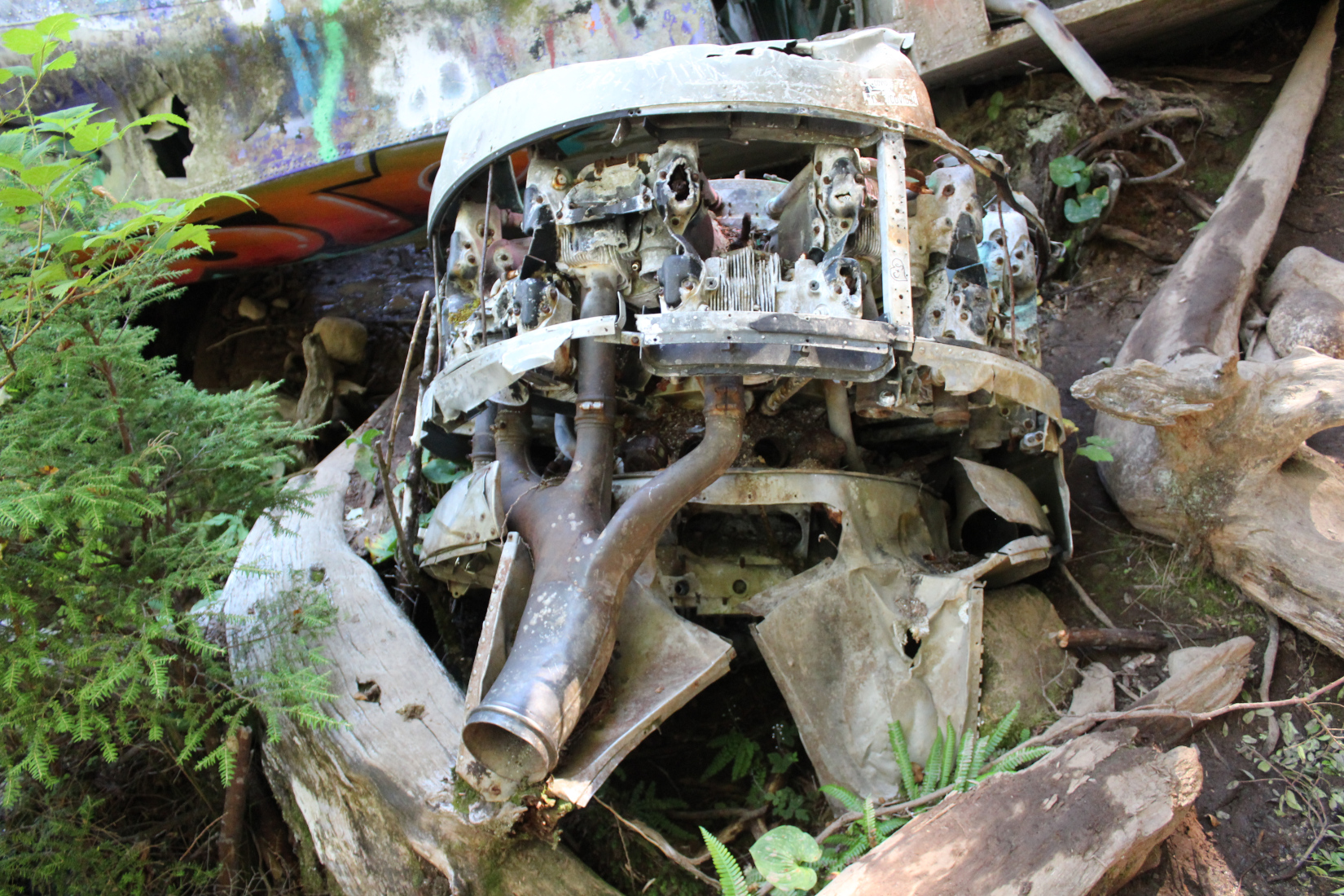
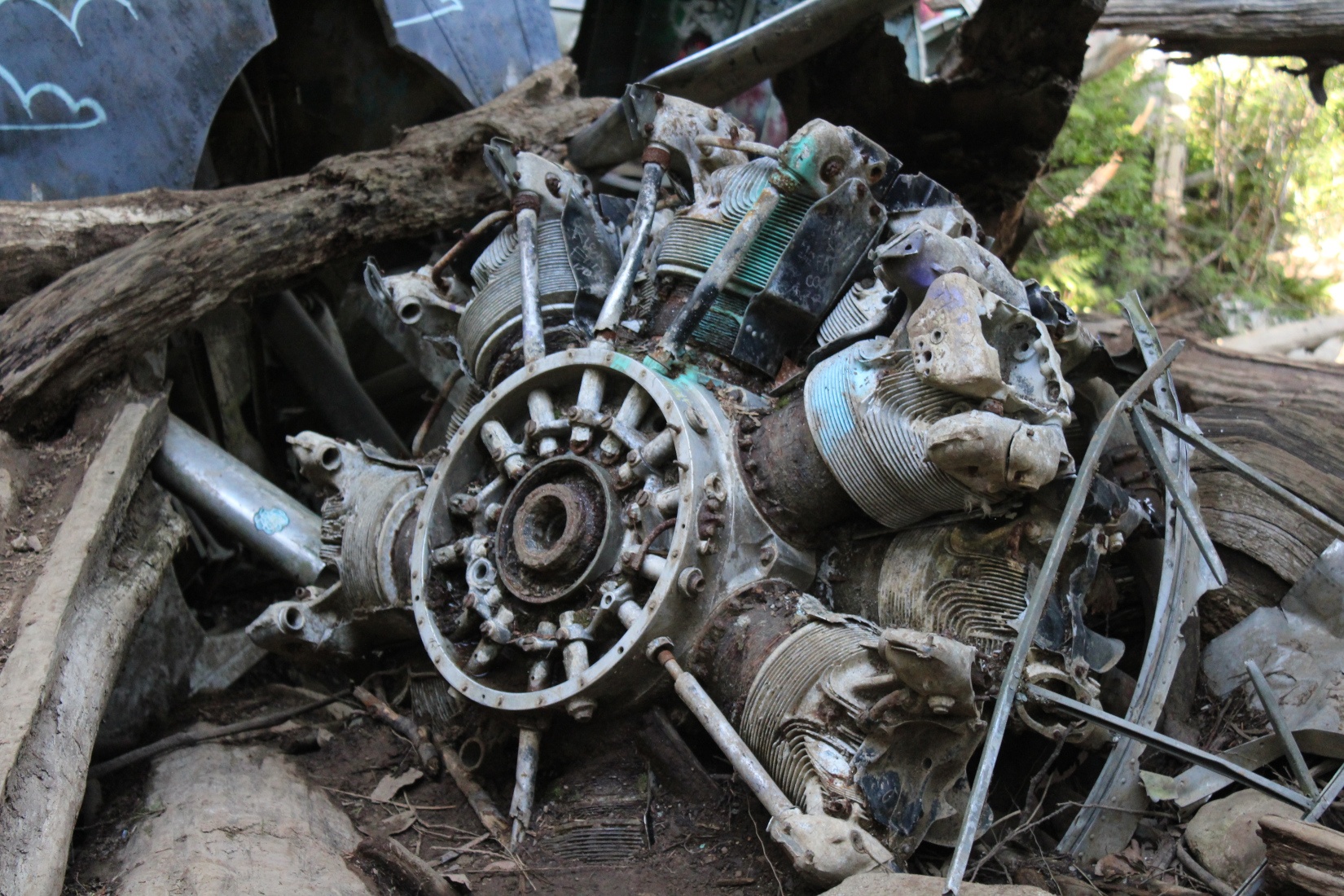
The port side engine — the cause of the crash, still at the site.
Well, one wasn’t aboard, being thrown from the plane and into a tree, 15ft above the ground. No one is sure how he go there, but this was February in Canada so they turned their attention to making a shelter for the night. Eventually they heard engines running at the airport and knew a search was underway.
They were rescued, crews cut a path to the plane and stripped it of useful or sensitive material, but left the damaged hulk because it was not repairable and barely accessible by foot. Nowadays the trail is pretty easy to follow, as hundreds of people visit the plane every year.
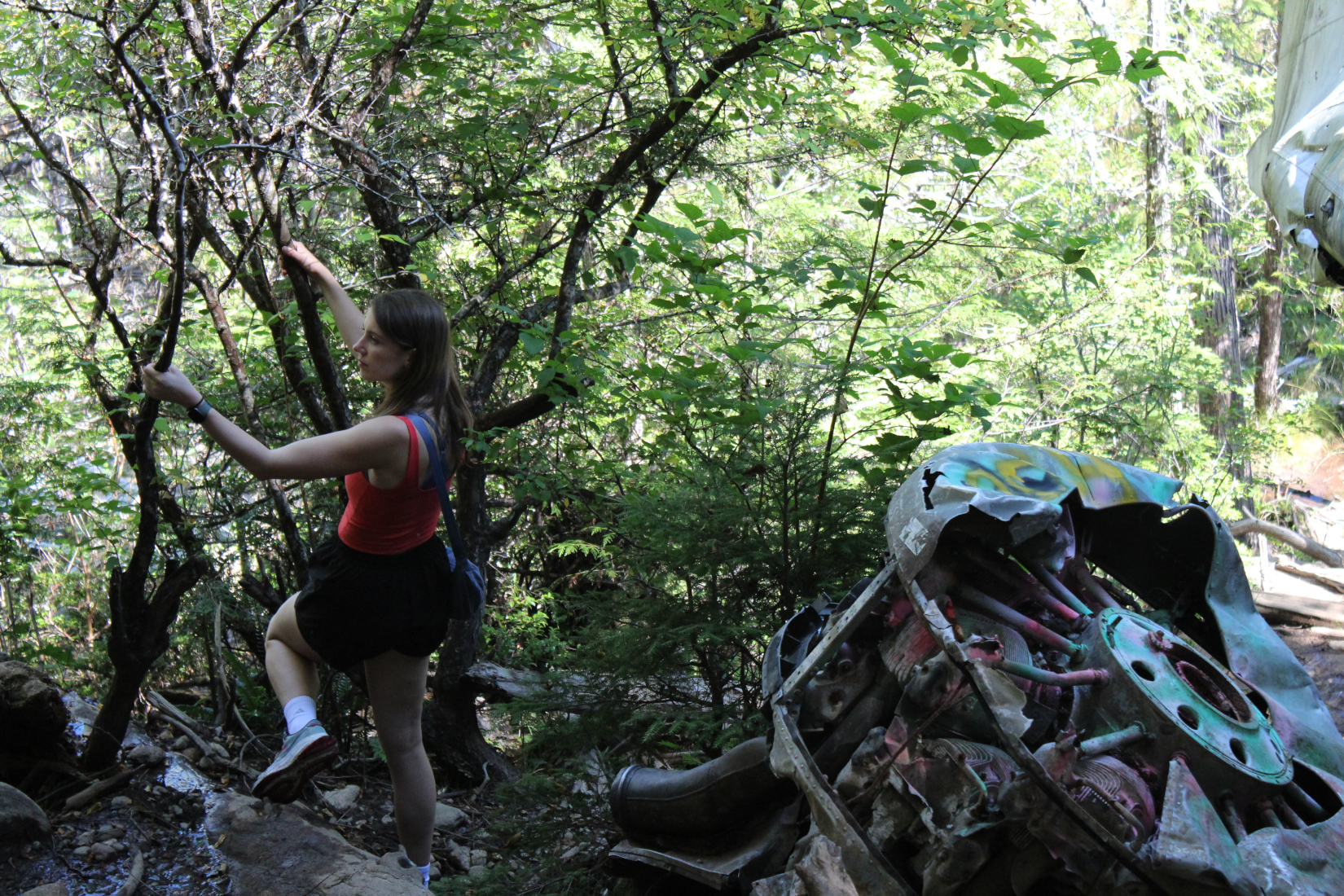
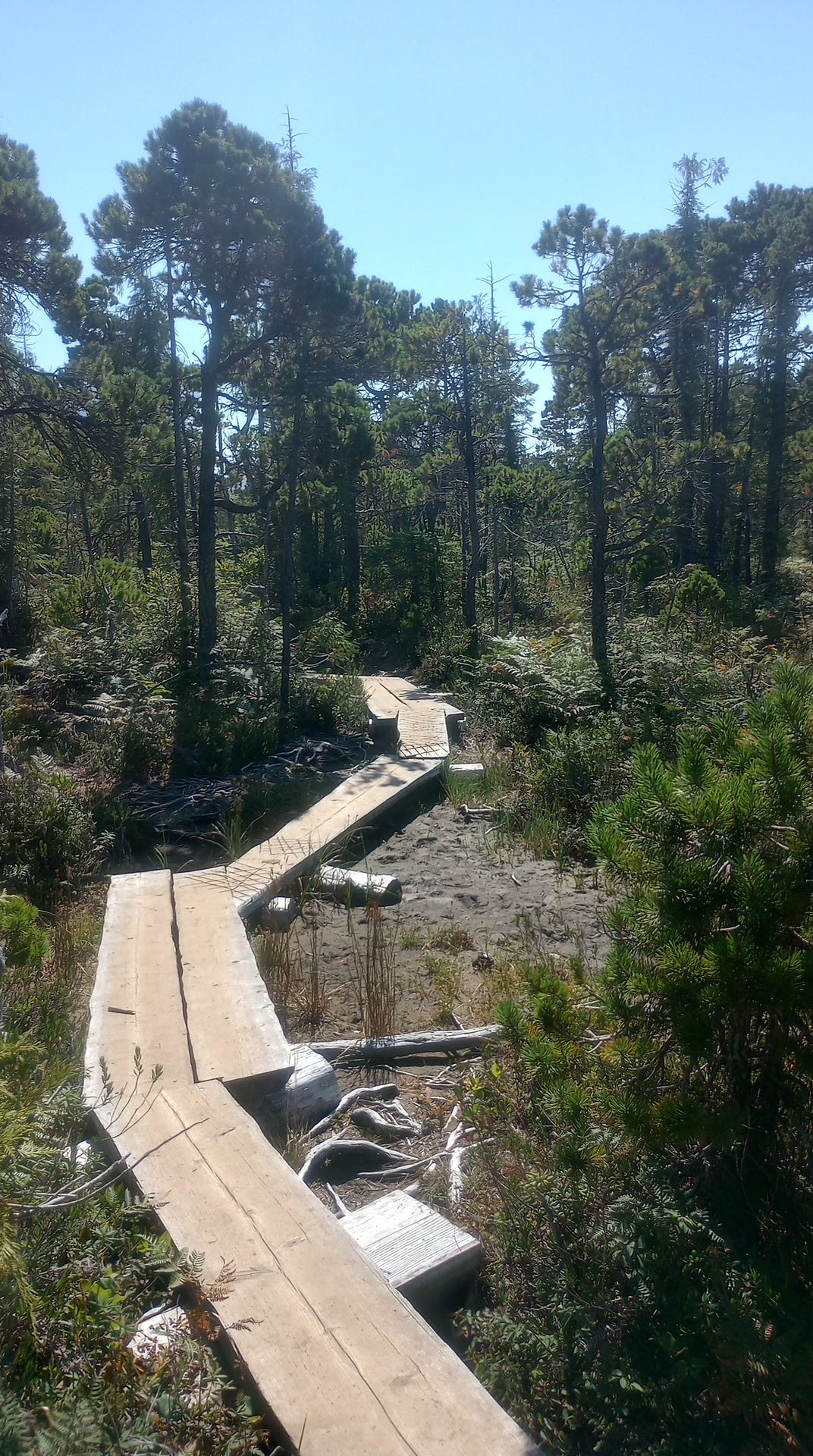
It takes a little less than an hour to get there, but you have to hoof it over a hill and down, then slightly up another. In between is mud, slick tree roots, and fallen trees. There are also soupy sections with boardwalks over them. It might actually be hard to follow the trail in spots with there was snow on the ground, but in summer you can follow the muddy footprints.
Once there the airplane is largely intact. The pilot made a real miracle happen, and the entire crew saved a lot of forest by extinguishing a small fire that started after the crash. Trees have grown up around it but you can probably still see the path of knocked-down trees from the air, even after more than 70 years.
I took photos, shared information with other wingnut enthusiasts, and listened to some tourist in yoga pants talk to each other with the most intoxicating Irish accent. My word, I’d be powerless if I ever went to Ireland on my own.
I did manage to sleep pretty good that night, having been worn out from the hike. Still I was worn out when I woke, and instead of making a 6-hr day out of the trip to my next location, I got only as far as Port Alberni before simply being to sore and tired to carry on — not even 100mi.
I found a cheap motel, which is not easy on this island, and settled in. A nap helped, and a good night’s sleep helped the tired part, but I might need to soak in a hot tub to get the sore part to go away.
My time on the island is coming to an end though. I’m working south, but have one more coastal run to do, so I can see a couple famous trees (yeah, that’s really a thing). Then I’ll poke around Victoria one more time to see a few sights I didn’t have time for, then go up the eastern peninsula to where I started: Sidney. The Mars has been set in place now, so I can see it up close, and tour the museum there.
Then it’s back onto the ferry to hit the mainland again. I have no clue what I’m doing after that. I do have one person to visit in BC, but any plans for exploring BC in detail would be done on my dual sport bike, and in conjunction with a trip further up to the Yukon Province and Alaska. That means I’ll be heading south at some point in the next few weeks. Where?
Well, the Spruce Goose is one goal. Why not see the worlds biggest flying boat after this trip to see the Mars? It was actually a proposed replacement for the Mars, but the end of the war made it unfeasible to operate something so massive; there was no need to move huge numbers of troops or cargo in such hurry anymore.
That puts me on a trajectory south, along the coast. I’ve also got little interest in exploring the coast, as I’ve done it recently. I might go into California just for the free camping at State Parks there. With a 14-night max at most of them, maybe I could sit still long enough to come up with a real plan beyond, “go places and see things.” Or maybe I’ll at least figure out a place I want to stay for the winter this season.
For now, I’ll keep trying to find meaning and purpose in the hum-drum of my days, staying fully aware it’s still better than working a 9-5. Happiness is still in us as individuals. It’s not places or activities or relationships with other people. It isn’t in experiences or property — it is generated from within and can be present in the worst of times, or missing during the best.
 Johnny Killmore