
Halfway through February?!! It seems like each year just continues to pick up speed. I remember my twenties and thirties being fast-paced because of how much was going on, but it seems my forties are moving by even faster for the exact opposite reason: every day blurs into the next because so little is happening.
I recently saw an article about the concept of feeling lost: those periods when you aren’t sure what you’re doing, what you should be doing, or why you should do anything at all (it’s a 2019 blog post from someone named Brad Stulberg, though I found it on Pocket, which is a news aggregator on the Firefox web browser)
. I’ve more or less been on that trajectory since 2018. That is when I graduated from college, stopped racing sidecars, and had stopped writing music. The lost feeling was a relief at first of course. I was totally exhausted from doing so much at once.
By 2020 I also had the same COVID-19 malaise that set in for much of the continent, if not world. At the same time though I put everything in storage and spent six months circling the country with my then-girlfriend. It was after things ended between us the following year that the “unanchored” feeling really set in. Things were still in storage, everyone I knew in the San Francisco Bay had moved away, and even my family moved halfway across the country.
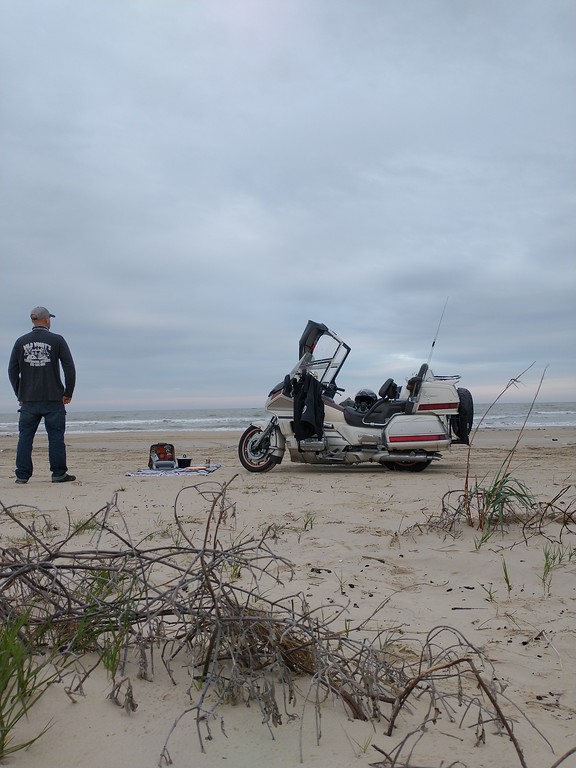
The next several years were spent as a man without a country. I have wandered the US, Mexico, and Canada, trying to add a vague sense of purpose. What’s the difference between wandering and exploring? Well, purpose. But going to Maine for a lobster roll isn’t really a purpose. As much as I prefer wandering to sitting at a dead-end job watching the clock, wandering does not have any purpose.
Of course, nothing actually has purpose. We apply meaning to thoughts and actions that give them purpose. Still, it is commonplace for people to look outward for purpose. I’m smart enough to catch myself doing that, but not yet wise enough to simply apply purpose to something and move forward with it, and spirituality doesn’t really give a pathway in this particular situation.
The basic concept in many spiritual practices is to simply observe without attachment. That means that a feeling of being lost is not good or bad—it simply “is.” Declaring it as “wrong” and pushing against it is folly; what we resist is likely to persist. It is also no good to revel in the nihilism of being lost. Observing in a detached and nonjudgmental way is the answer according to many practices, but there is an obvious downside: you are essentially waiting for a magic “ah-ha” moment to give you guidance.
Judging and assessing can certainly drag out periods of confusion or uncertainty, as we get bogged down in analysis. At the same time, being an empty vessel waiting to be filled with purpose is extremely faith-based. Nothing against faith mind you, but I’ve been through every phase of analyzing, praying, ignoring, and “fake it ’till you make it” that’s possible, and no “ah-ha” moment is sending me off with purpose.

The article puts the phases in extremely simple terms: order > disorder > reorder. Other people phrase it as orientation > disorientation > reorientation. It’s the middle phase I’m talking about, no matter how you want to phrase it. I like how the article closes on the idea:
Whether we’re talking about a marriage, a career, training for a marathon, building a business, writing a book, or walking a spiritual path, the middle phases — which, for anything you care deeply about, are unavoidable — are often the hardest. They are immune to strategizing and planning and controlling. There’s a risk in spending too little time in them and there’s an equal risk in getting stuck in them for too long. Perhaps the best thing to do is cultivate the capacity to name when you’re in these phases and then pay close attention to what is happening. It is in this way that you’ll learn when to keep being and when — and what — to start doing.
Being and doing is another deep-yet-simple concept. Easy to understand, difficult to explain. I’ll pass on explaining it and just say it is often more productive to look at who you are being instead of making lists of what you’ve been doing. When you are looking to answer the “what am I doing” question, your “doing” is more like a result of who you are “being.”
But of course, from the inside looking out, we all struggle to figure out who we are; that’s a major reason we like to look at what we do to decide who we are. I’d like to take such mental shortcuts, but damnit, I already crossed that bridge and left it far behind. You can also drive yourself mad trying to answer something as vague as “who am I being?” It’s where the magic happens though.
I ain’t here to peddle self-help books or recruit you into my doomsday cult though. I mean, if you want to start one, let’s talk… I’ve got tons of downtime and am looking for something to do. But really, the “who am I being” question is something I am trying to answer year-round. Traveling doesn’t make it go away and the downtime in winter gives me even more down time to contemplate.
In short, overthinking existential questions is something I have far too much time for.
But Other Than That
And that’s another one of the simple answers that spiritual practices will often give: when nothing feels right, just do something. Focusing on the moment and the experience can be freeing. It is sometimes called mindfulness but what it really means is to simply be present in the moment; don’t be on your phone or thinking about what you’re going to do next.
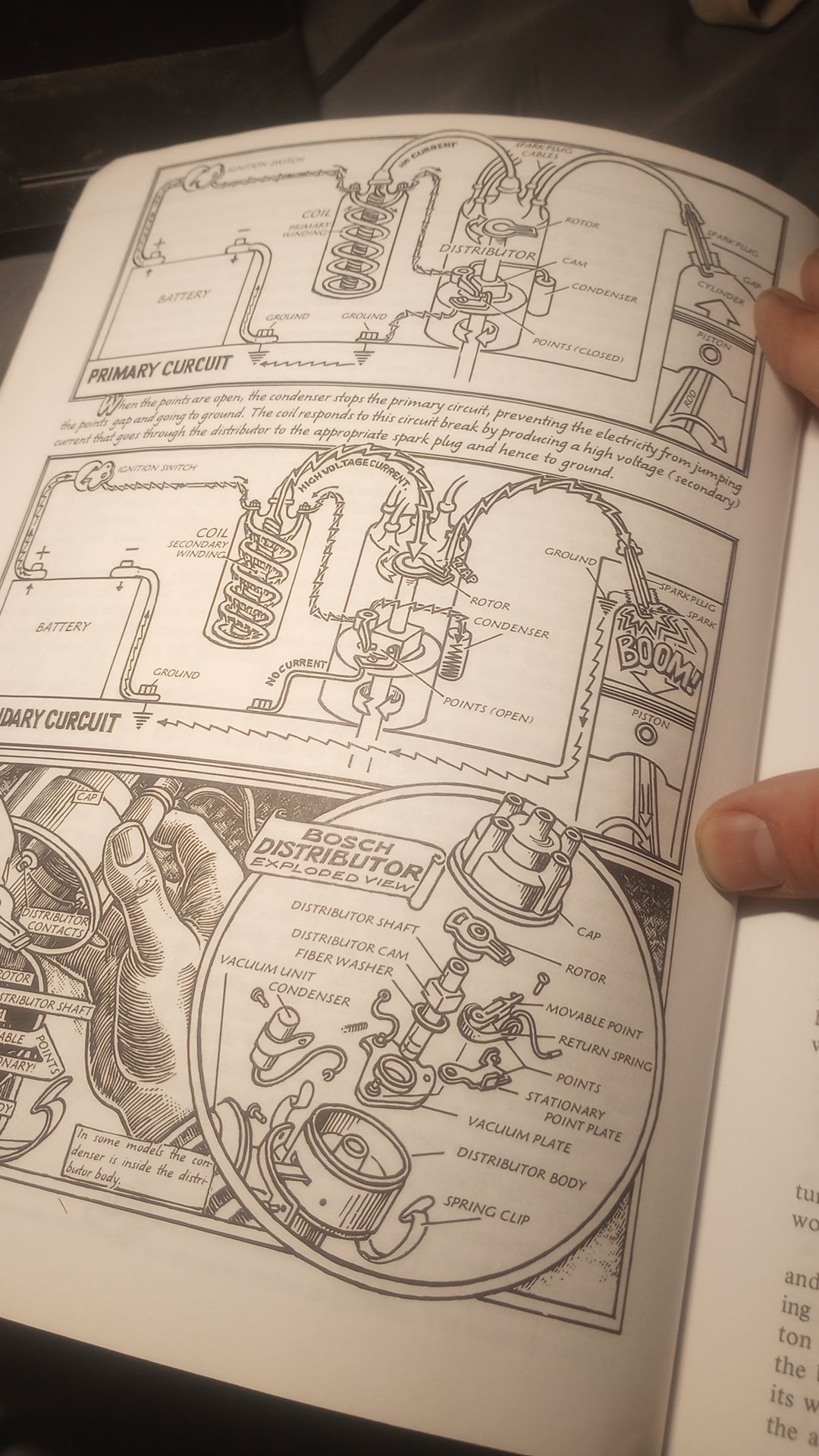
Recently the ignition coil went out on my VW. Super-easy to swap, but I tried to stay focused on the task. I didn’t think about other things the car needs or where I’m going to buy a new coil. I stayed focused on the task, cleaning old electrical connection of corrosion, doing resistance checks with a multimeter, and loosening the one clamp that holds the coil in place.
I also had to pull the carburetor off of the Suzuki and clean it again. It’s actually an easy job on this particular bike, but I stayed focused on the moment. By staying focused on what I was doing, I was being focused. Fun trick, and it goes to show why simple-sounding answers aren’t so simple in practice. If I focused on who I was being, I wouldn’t have been present in the moment, making it impossible to actually observe who I was being.
So, being present in the moment is something that is simple to do, and yet very simple to fail at. My biggest gripe with spirituality is that it is a practice that you are somehow supposed to learn, but intellectually understanding it isn’t actually learning; you must experience the lessons in order to learn them. Memorizing chants doesn’t make you spiritual. At most it makes you a spiritualist.
Cleaning a carburetor is not something people would think of as a spiritual practice, but spiritual practice is supposed to show up as a being, not a doing, remember?
Well, if you feel like you have been run around in circles by this, I probably explained it well. If you feel like you grasped it, you’ve probably already been involved in some kind of spiritual practice. It really seems to me that spirituality is run around in circles in you head trying to figure something out, then realizing there is nothing to figure out, then going, “oooohhhhhhhh!!!”
Up Next
And in the coming weeks there isn’t much new. I joined a writer’s critique group which is helping me with my book, but it’s still a struggle to just sit the heck down and write more pages. I’ve got my vehicles needing attention. The Chieftain is currently happy, but the Suzuki has a short list of deferred things I need to do, and that assumes the fix to the carburetor actually fixed the stuttering problem (it was intermittent, so my 30mi test ride doesn’t prove it’s truly fixed).

The VW has a long list of little things, but many of them are not “needs” but “should probably’s.” I need to fix slow moving windshield wipers and add 12V charging ports and such, but much of the list is things like adding an oil temperature gauge or replacing a part that makes the gearshift feel vague and sloppy because it is worn out.
The car still runs with or without these things, but it’s good to improve things before you end up with a long list of things that are ready to break at any moment. Next month is also “The Prowl,” a chopper and custom bike rally that happens in Brewery Gultch in Bisbee. That will be something to look forward to, but for the most part this is winter—the time things are supposed to be repetitive.

It is a great time for these wandering contemplations, and is also the perfect time to look at a map and start thinking, “hmm…where should I go this year?” Back to Colorado to finish what I started in 2023? Out to Newfoundland to start what I had to abort in 2024? Maybe this is the year for Alaska? Mexico is always there too, though if I do Mexico I’d like to continue south to Panama and eventually all the way to Ushuia, down south.
It is a good problem to have, but it also brings me full circle to that annoying question of, “what am I doing, why am I doing it, and is it what I should be doing?” Circular thoughts are a great way to go mad during the winter doldrums. It’s a good time to go mad any time though…if you (over)think about it.
 Johnny Killmore